🌀 Ghoomar Dance
RoyalWomenWedding
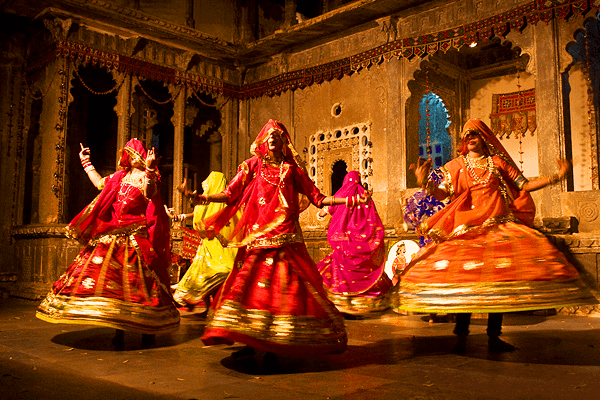
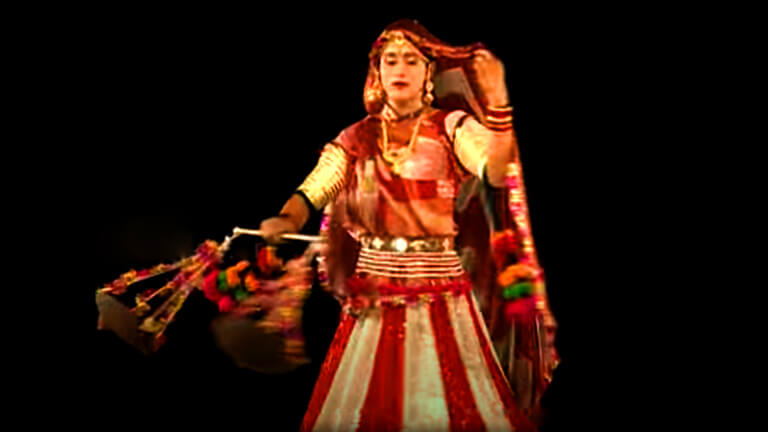
Ghoomar is the most iconic of all folk dances of Rajasthan, originating with the Bhil tribe
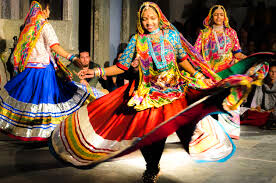
and later adopted by Rajput royalty. Performed exclusively by women, dancers wear voluminous mirror-work ghagras
and pirouette in hypnotic circles — the name derives from ghoomna (to whirl). The swirling fabric
creates a visual spectacle under stage lighting. Traditionally performed during Gangaur and royal weddings,
Ghoomar gained global fame through its portrayal in the film Padmaavat. The performance requires
controlled breathing, precise footwork, and graceful veil management — skills passed down through generations.
It is Rajasthan's official state dance and the most requested Rajasthani folk performance at destination
weddings, sangeet ceremonies, and cultural tourism events across India.
🐴 Kachhi Ghodi Dance
RoyalWeddingMen
Kachhi Ghodi is one of the most visually arresting folk dances of Rajasthan, performed by
male dancers wearing elaborate bamboo dummy horse costumes — creating the illusion of riding a decorated
mare. Originating in the Shekhawati region, it was traditionally performed at weddings to honour the bridegroom.
Performers wear bright turbans, carry swords, and execute swift rhythmic footwork while "mounted." The dummy
horse is richly adorned with fabric, mirrors, and bells. Live shehnai and dholak accompany the act. A
high-energy crowd-pleaser, Kachhi Ghodi is a top choice for baraat processions, cultural shows, and corporate
entertainment events that need an instant visual impact.
🏺 Bhawai Dance
AcrobaticDevotionalWomen
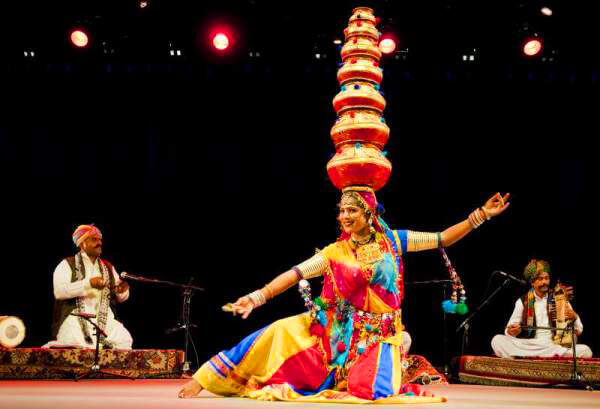
Bhawai is a breathtaking folk dance of Rajasthan showcasing extraordinary balance and
acrobatic skill. Women of the Bhawai community balance up to nine or more brass pots on their heads while
dancing barefoot on the edges of swords, glass shards, or brass thalis. The performance blends grace,
concentration, and daring in equal measure. Originating as a votive dance to the goddess Amba Mata, Bhawai
is performed at cultural festivals, heritage tourism events, and luxury wedding entertainment. The colourful
lehenga, expressive mudras, and eerie poise make Bhawai one of the most distinctive and unforgettable
folk dances of Rajasthan to witness live.
🎵 Terah Taali Dance
DevotionalPercussionWomen
Terah Taali — "thirteen cymbals" — is among the most unique devotional folk dances of Rajasthan,
performed by the Kamad community as a tribute to folk deity Ramdeoji. Seated on the ground, female performers
tie thirteen small brass manjeeras to their elbows, wrists, and knees, then strike them in complex rhythmic
patterns — while simultaneously balancing diyas on their heads or holding swords in their mouths. The
synchronised percussion created entirely by their own body movements is extraordinary. Terah Taali troupes
are sought for cultural festivals, heritage hotel performances, documentary shoots, and high-profile events
that demand genuine folk authenticity.
💃 Jhumar Dance
LyricalWomenFestival
Jhumar is a graceful, lyrical folk dance of Rajasthan performed predominantly by women
during festivals and domestic celebrations. Named after the jhumar head ornament, the dance has a gentle
swaying, ornamental quality distinct from the vigorous whirling of Ghoomar. Performed in a semicircle, women
move in synchronised formations singing folk songs about love, seasons, and the longing of separation (viraha).
Associated with the Bikaner and Marwar regions, costumes include mirror-work odhnas, heavy silver jewellery,
and layered ghagras in jewel tones. Jhumar's refined, poignant character makes it ideal for heritage hotel
cultural evenings, literary festivals, and formal cultural programmes.
⚔️ Yudh Dance
WarriorMenRajput
Yudh Dance — the warrior folk dance of Rajasthan — draws from the martial traditions of
Rajput clans, re-enacting battle formations, sword-play, and the raw valour of Rajputana warfare. Performed
by men in full warrior regalia — turbans, armour-style costumes, shields, and swords — the choreography
mimics combat with thundering footwork, leaps, and controlled sword clashes. Performed at fairs and cultural
festivals primarily in Jodhpur and Jaipur, the accompanying music is martial and percussive, featuring nagara
battle drums and shehnai. Yudh Dance carries tremendous stage presence and is frequently sought for patriotic
events, branded corporate experiences, and large outdoor cultural festivals.
🐍 Kalbeliya Dance
UNESCO ListedKalbelia Caste
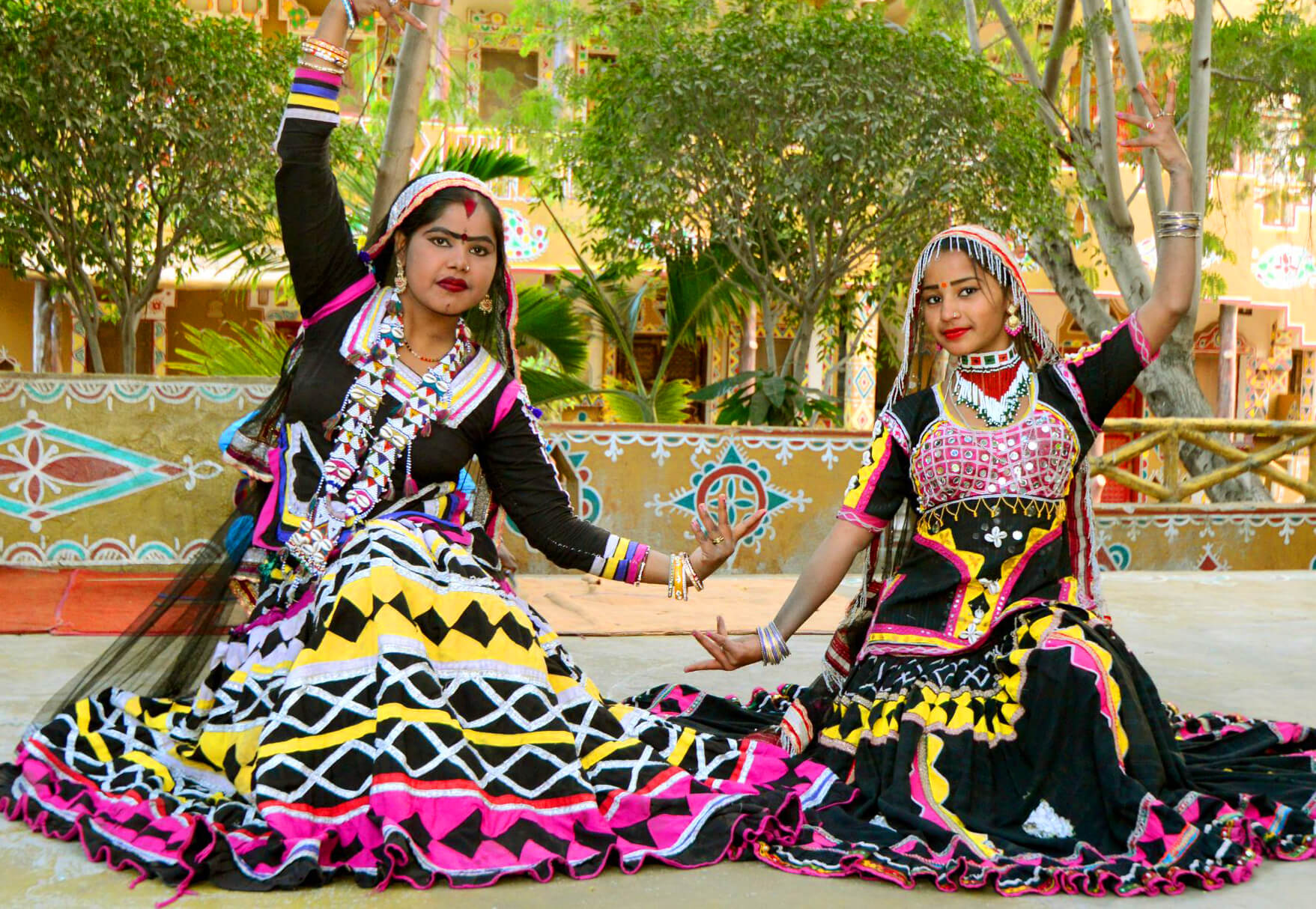
Kalbeliya dance — performed by women of the snake-charmer Kalbelia caste — is UNESCO
Intangible Cultural Heritage and among the most globally celebrated folk dances of Rajasthan.
The dancer's black swirling skirt mimics the sinuous movement of a serpent while she undulates and spins
to the haunting notes of the been (pungi flute) and dholak. Intricate silver embroidery on black fabric
glimmers dramatically under stage lighting. Traditionally performed at Pushkar Fair and Holi, Kalbeliya is
now booked for international festivals, luxury destination weddings, and cultural diplomacy events. Authentic
Kalbelia troupes primarily come from Jaisalmer and Pushkar — the heartland of this tradition.
🏹 Gair Dance — Bheel Tribe
Bheel TribeGroupHoli
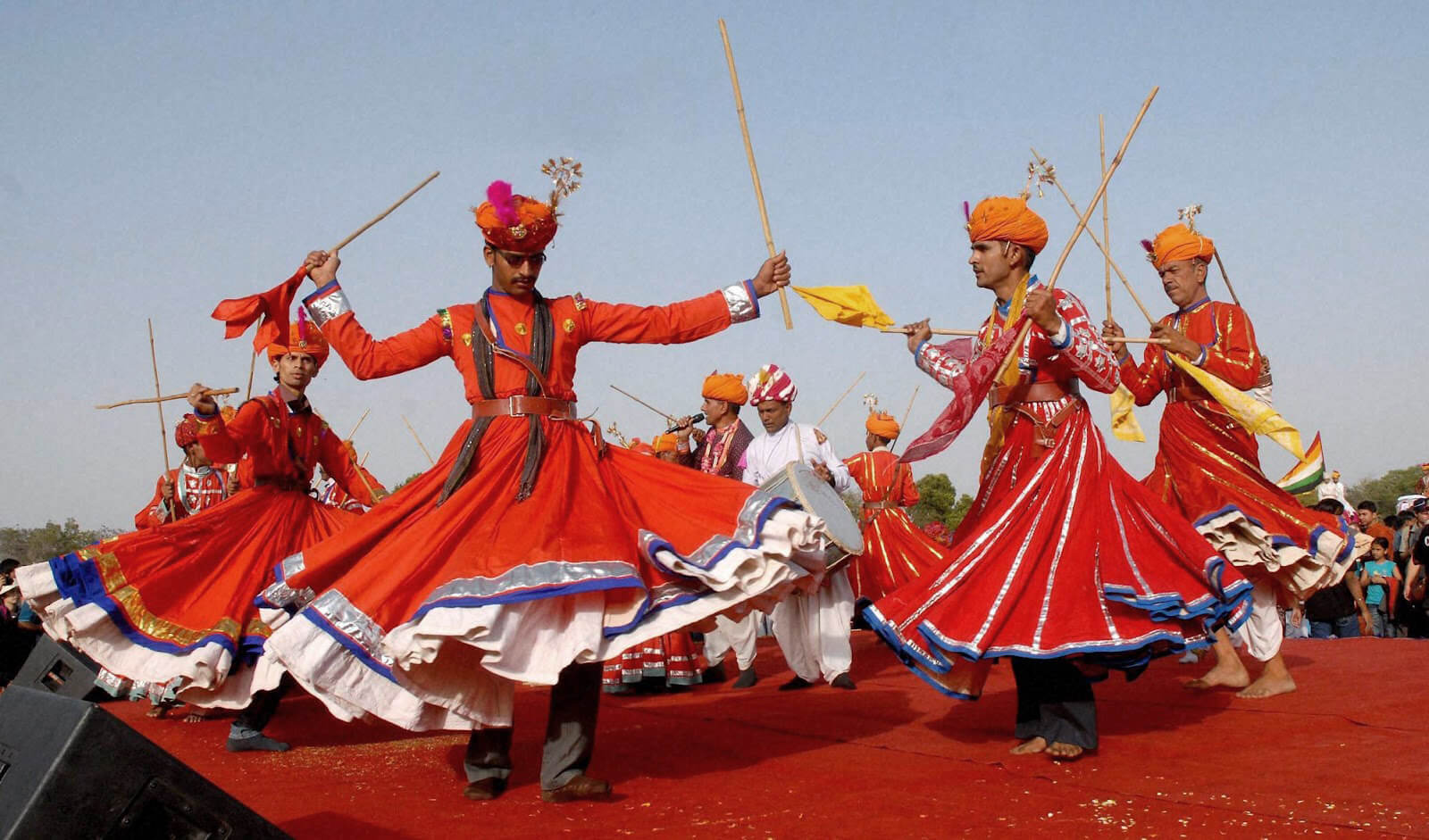
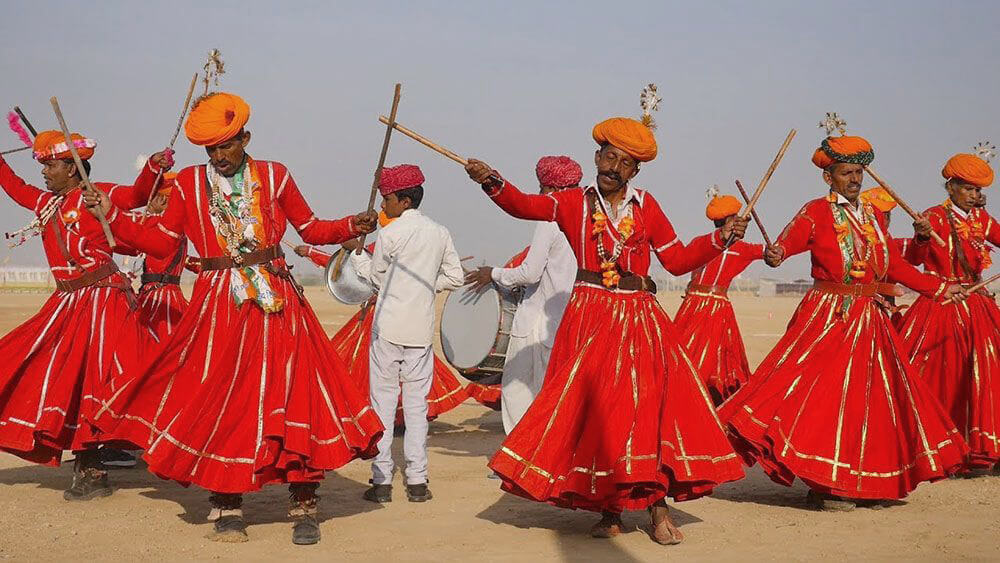
Gair Dance is one of the most visually spectacular folk dances of Rajasthan, performed
primarily by men of the Bheel tribe during Holi and Janmashtami. Dancers form concentric
circles moving in opposite directions, striking long sticks with each pass — the clacking rhythm building
into hypnotic percussion beneath folk vocals. Traditional performers wear vibrant ankle-length ghagras that
fan dramatically as they spin. Some variants incorporate swords instead of sticks. Originating in Bhil
and Rabari communities, Gair is now performed state-wide as a symbol of Rajasthani unity. Large-group Gair
is visually stunning for outdoor cultural showcases and festivals.
🎭 Gavri Dance — Bheel Tribe
Bheel TribeRitual Drama
Gavri is a month-long ritualistic dance-drama performed by the Bheel tribe of southern
Rajasthan after Rakhi — one of the most ancient living theatrical traditions among the
folk dances of Rajasthan. The performances depict the mythological story of Shiva and
the demon Bhasmasur across multiple nights, with villagers enacting roles through dance, song, and dramatic
storytelling. Unlike staged performances, Gavri is a community pilgrimage — performers are considered in a
sacred state throughout the month. The characters, costumes, and narratives vary by village and
sub-community, making every Gavri performance a unique window into Bheel oral mythology and cosmology.
🌄 Valar Dance — Garasia Tribe
Garasia TribeCoupleFestival
Valar Dance is a rare celebratory group performance of the Garasia tribe inhabiting the
Aravalli hills near Abu Road — and one of the few mixed-gender folk dances of Rajasthan
where men and women dance together freely. Performed during Gauri-Shankar festivals, the dance features
flowing circular formations accompanied by distinctive Garasia folk songs and the tadwa drum. The ease and
joy of Valar's mixed participation reflects the relatively egalitarian social customs of Garasia society,
setting it apart from the more segregated dance traditions of other Rajasthani communities. Valar is an
excellent choice for cultural heritage showcases seeking lesser-known authentic tribal performances.
🌾 Jawara Dance — Garasia Tribe
Garasia TribeHarvestWomen
Jawara Dance is a post-harvest thanksgiving performance of the Garasia tribe, performed
as an offering of gratitude after the wheat crop is gathered. Women balance fresh wheat-shoots (jawara)
on their heads while dancing in a circle, singing devotional harvest songs. The green shoots symbolise
abundance, fertility, and the life-giving power of rain — precious commodities in semi-arid Rajasthan.
Accompanied by the tadwa drum and antiphonal singing, Jawara has a meditative, earthy energy distinct from
the more theatrical folk dances of Rajasthan. The performance is ideal for ethnographic
festivals, folk arts programmes, and cultural tourism experiences seeking authentic tribal representation.
🌳 Hathimana Dance — Kathodi Tribe
Kathodi TribeRareDevotional
Hathimana Dance is one of the rarest folk dances of Rajasthan, performed by the
Kathodi tribe — originally forest-dwelling bamboo workers of the southern Aravalli belt.
The name references the elephant (hathi) and the dance is devotional, associated with their presiding
deity. Slow, powerful gestures symbolise the elephant's majesty, accompanied by tribal percussion and
haunting vocals. Performers wear white dhotis with red-bordered fabric and wild-flower headgear. As one
of the least documented tribal folk dances, Hathimana offers audiences an exceptionally rare cultural
experience — sought by heritage festivals, ethnographic exhibitions, and tribal arts programmes preserving
Rajasthan's indigenous performance heritage.
🎻 Ranvaja Dance — Mev Caste
Mev CasteWeddingCommunity
Ranvaja Dance is a spirited community performance of the Mev caste of Mewat — the
cultural border region between eastern Rajasthan and Haryana. Performed during weddings and festivals,
Ranvaja blends Rajasthani and Haryanvi folk styles with syncopated dholak rhythms and energetic group
formations. The dance reflects the Mev community's unique cultural identity at the
crossroads of multiple traditions — Hindu devotional, Sufi mystical, and rustic folk. Men and women
participate in separate formations that converge at key choreographic moments. Ranvaja is an excellent
choice for cultural galas and documentary productions representing the layered folk dances of
eastern Rajasthan.
🌙 Ratvai Dance — Mev Caste
Mev CasteRitualNight
Ratvai is a night-long ritual dance of the Mev caste, performed at religious jagran
(all-night vigil) gatherings. Characterised by call-and-response devotional singing and progressively
trance-like movements, Ratvai builds in intensity from evening to dawn. The term itself refers to the
night (rat) and the spiritual awakening that unfolds through sustained communal dance and song. Unlike
most folk dances of Rajasthan that are performed as set-piece presentations, Ratvai
is immersive and participatory — the boundary between performers and congregation dissolves as the
night deepens. Ratvai represents the Sufi-influenced devotional depth of Mev folk tradition.
🥁 Dhol Dance
PercussionMenWedding
Dhol Dance elevates the drummer himself to principal performer — one of the most electrifying
folk dances of Rajasthan. Master dhol players perform dynamic acrobatic feats while
playing: spinning the drum overhead, playing behind their backs, and leading groups of dancers in
explosive foot-stamping choreography. The thunderous bass of the Rajasthani dhol carries for miles and
signals celebration. Performed at weddings, fairs, and community events across the state, Dhol Dance
electrifies any gathering within seconds. It remains among the most booked acts for baraat processions,
sports events, brand activations, and stadium-scale entertainment — guaranteed to energise any audience
regardless of cultural background.
🔵 Ger Dance
GroupHoliMen
Ger Dance (also written Gair) is a large-group folk dance of Rajasthan performed during
Holi and Marwar festivals. Dancers form concentric circles moving in opposite directions, striking long
coloured sticks with each pass — building a hypnotic percussion layer beneath folk music. Performers wear
vibrant ankle-length ghagras that fan dramatically as they spin, and some variants incorporate swords.
The word ger itself refers to the circular formation. Ger has evolved from specific Bhil and
Rabari community origins into a state-wide symbol of Rajasthani folk celebration. Large-group Ger
performances create tremendous visual impact at outdoor events and are particularly striking when
viewed from above.
🔥 Agni Dance (Fire Dance)
FireDevotionalBikaner
Agni Dance — Rajasthan's legendary Fire Dance — is performed by the Jasnathi Sidh sect
of Bikaner. Devotees walk, roll, and perform on a bed of live burning coals, believed to be protected
by their faith in Guru Jambheshwar. The performance begins with devotional bhajans building in intensity
before the fire bed is prepared. Not a stunt but a test of spiritual surrender, Agni Dance carries deep
religious significance. Among the folk dances of Rajasthan, it is the most visually
dramatic and most discussed in international cultural circuits. Theatrical fire-dance variants incorporating
flaming torches and fire-breathing are also performed at destination weddings and corporate gala evenings.
🏮 Ghudla Dance
RitualGirlsGangaur
Ghudla Dance is a ritualistic folk dance of Rajasthan performed by young girls of the
Marwar region for eight nights leading up to Gangaur. The ceremony centres on a clay pot (ghudla) with
small perforations, lit from within by an oil lamp, which girls carry on their heads while dancing
door-to-door through the village — collecting coins and sweets while singing folk songs. The glowing
ghudla symbolises the severed head of a Pathan chieftain in a folk legend of bravery. The night
procession, illuminated only by the perforated lamp-pots against the dark village lanes, creates an
extraordinarily atmospheric spectacle that is unlike any other folk dance of Rajasthan.
🎺 Bam Dance
PercussionMenHoli
Bam Dance is a powerful masculine folk dance of Rajasthan from the Alwar and Bharatpur
regions, performed to the bam — a massive double-headed drum requiring two players and audible from
miles away. Associated with Holi, the dance is performed exclusively by men in vigorous competitive
groups wearing dhoti-kurtas and colourful pagdis. Foot-stamping patterns mirror the drum's thunderous
intensity. Bam Dance represents the raw earthy masculinity of eastern Rajasthani folk culture and is
among the lesser-documented folk dances of Rajasthan — making it a compelling choice
for cultural festivals seeking authentic, unfamiliar regional forms beyond the more famous Ghoomar
and Kalbeliya.
❤️ Shankariya Dance
Couple DanceDevotionalKanjar
Shankariya is a romantic couple folk dance of Rajasthan performed by the Kanjar community
of eastern Rajasthan. The dance enacts the playful courtship of Shankara (Shiva) and Parvati — a male
and female performer exchanging flirtatious glances and teasing movements in lively call-and-response.
Playful dramatic expressions and comic timing make Shankariya an audience favourite at cultural evenings.
Accompanied by nagara drums, khartal, and folk vocals, the performance carries earthy humour while
venerating the divine couple. Among the folk dances of Rajasthan, Shankariya is one
of very few partner-based forms — a charming contrast to the more intense acrobatic and group
traditions of the region.
💧 Panihari Dance
WomenLyricalBalance
Panihari Dance — "dance of the water-carriers" — is a lyrical folk dance of Rajasthan
celebrating the everyday heroism of desert women who walk miles to fetch water. Performers balance
multiple brass water-pots on their heads while executing graceful footwork and expressive mudras, singing
folk songs about the desert, the wait for monsoon, and longing for loved ones. The pots are stacked
progressively higher as the performance builds in intensity. Panihari embodies Rajasthani womanhood —
dignified, resilient, and beautiful. This evocative dance resonates deeply with audiences and is popular
at cultural galas, women's empowerment programmes, and international folk festivals representing the
lyrical traditions of the Thar Desert.
🙏 Languriya Dance
DevotionalKarauliMen
Languriya Dance is a devotional folk dance of Rajasthan performed in honour of Kaila
Devi of Karauli — one of the most important folk goddesses of eastern Rajasthan. Languriya refers to the
divine dwarf attendant of the goddess, and the performances enact playful, earthy devotional narratives
around this deity-devotee relationship. Men dressed as Languriya in characteristic costume and masks
perform during the grand Kaila Devi mela, drawing lakhs of pilgrims annually. The accompanying songs are
simultaneously humorous and intensely devotional — a distinctly Rajasthani blend. Languriya performers
represent the Karauli region's living heritage at cultural festivals and religious tourism events.
🪔 Indoni Dance
WomenWeddingCommunity
Indoni Dance is a celebratory folk dance of Rajasthan named after the ring-shaped fabric
pad (indoni) women use to balance water pots on their heads. Like Panihari, it draws from the visual
poetry of water-fetching in the Thar Desert — but Indoni is more festive in character, performed at
weddings and community celebrations rather than as devotional performance. Dancers from the Gurjar and
Bhil communities perform in colourful groups, with the indoni decorating their heads as a crown-like
ornament. The circular group formation mirrors the shape of the indoni itself. Songs are cheerful and
celebratory, creating an accessible, joyful introduction to the folk dances of Rajasthan.
🌸 Loor Dance
WomenHoliVocal
Loor is a seasonal folk dance of Rajasthan performed by women and girls during Holi in
the Hadoti and Shekhawati regions. The dance celebrates the arrival of spring with young unmarried women
singing Loor songs — ballads about the pangs of love and joy of reunion — while dancing in circles at
dusk. Loor emphasises vocal harmony over acrobatics, with antiphonal structure: one group sings, the
other responds. This intimate, community-bound tradition has been transmitted orally through generations
of Rajasthani women. Loor represents the quieter, more personal face of the folk dances of
Rajasthan — less theatrical than Ghoomar or Kalbeliya, but deeply authentic and emotionally
resonant.
⭕ Dwichakri Dance
GroupMixedFestival
Dwichakri — "double circle" — is a structured group folk dance of Rajasthan in which
performers organise into two concentric rings moving in opposite directions. Both men and women
participate, with inner and outer circles exchanging partners at set choreographic intervals. The dual
circular movement symbolises cosmic duality — inner and outer, masculine and feminine, moving in
perpetual harmony. Accompanied by dholak and folk vocals, Dwichakri requires precise group coordination
and is visually impressive at scale. Large formations are particularly stunning from aerial perspectives,
making Dwichakri a compelling choice for outdoor cultural events and folk arts festivals seeking
visually dynamic but lesser-known folk dances of Rajasthan.