🏆 Most Famous
Wangala Dance
The Hundred Drums Festival Dance
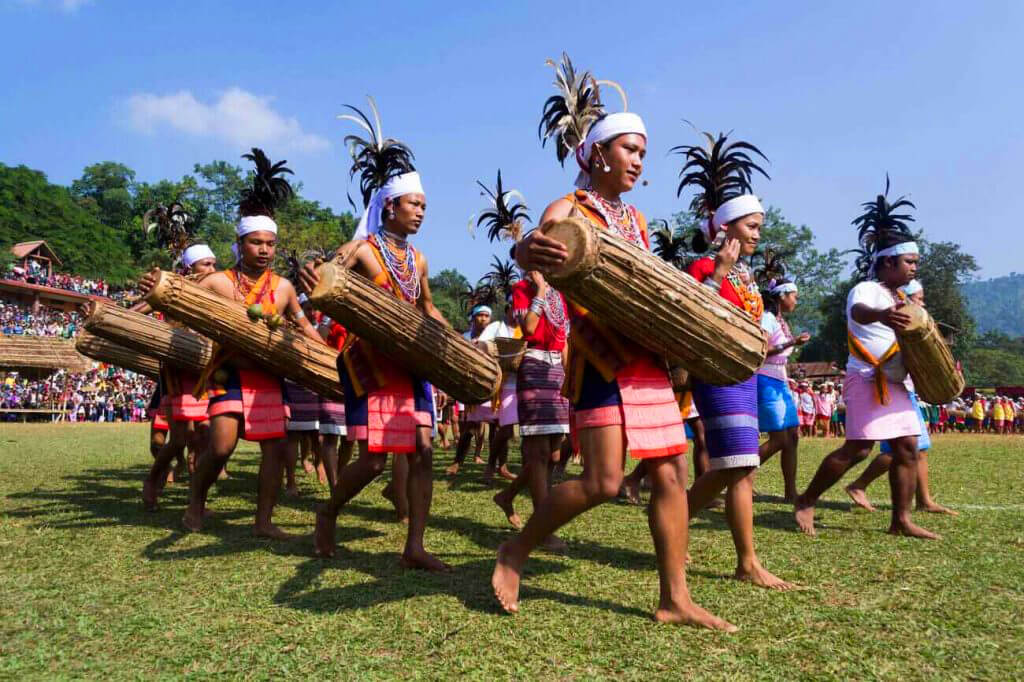
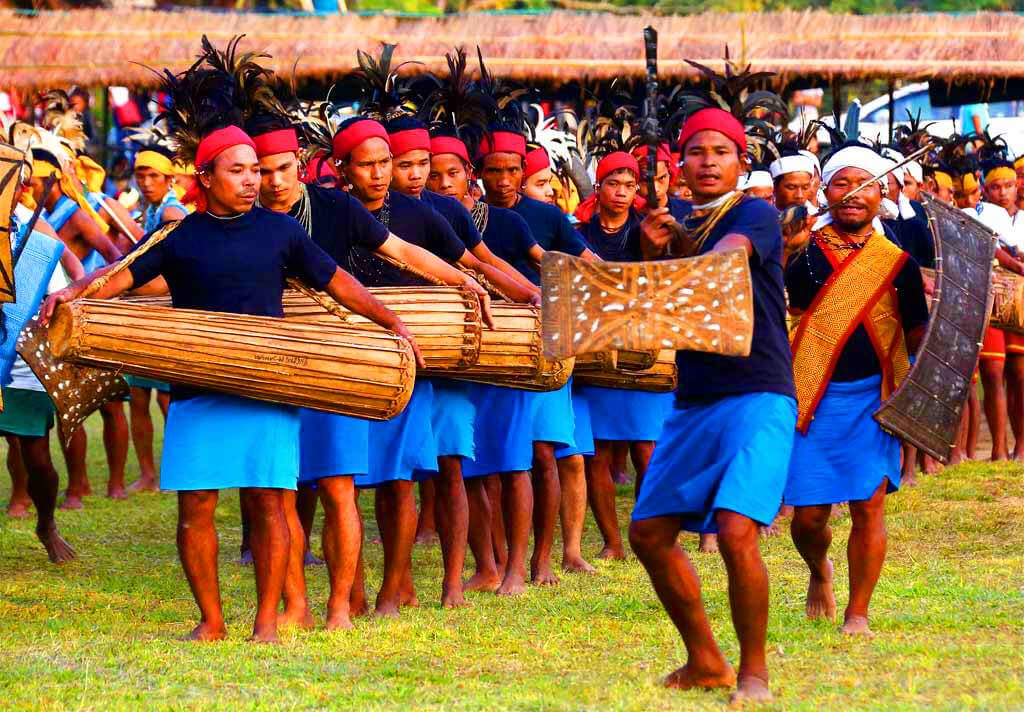
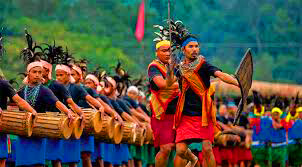
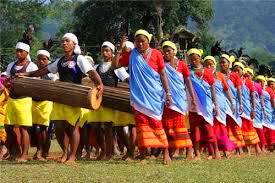
Wangala Dance is unquestionably the most famous folk dance of Meghalaya and the crown jewel of Garo cultural heritage. Performed during the Wangala Festival — the post-harvest festival of the Garo people held in November — the dance is a joyful, thunderous thanksgiving to Saljong, the Garo sun god, for blessing the harvest. The festival is also called the "Hundred Drums Festival" because of the spectacular ensemble of dozens of traditional Garo drums performing simultaneously.
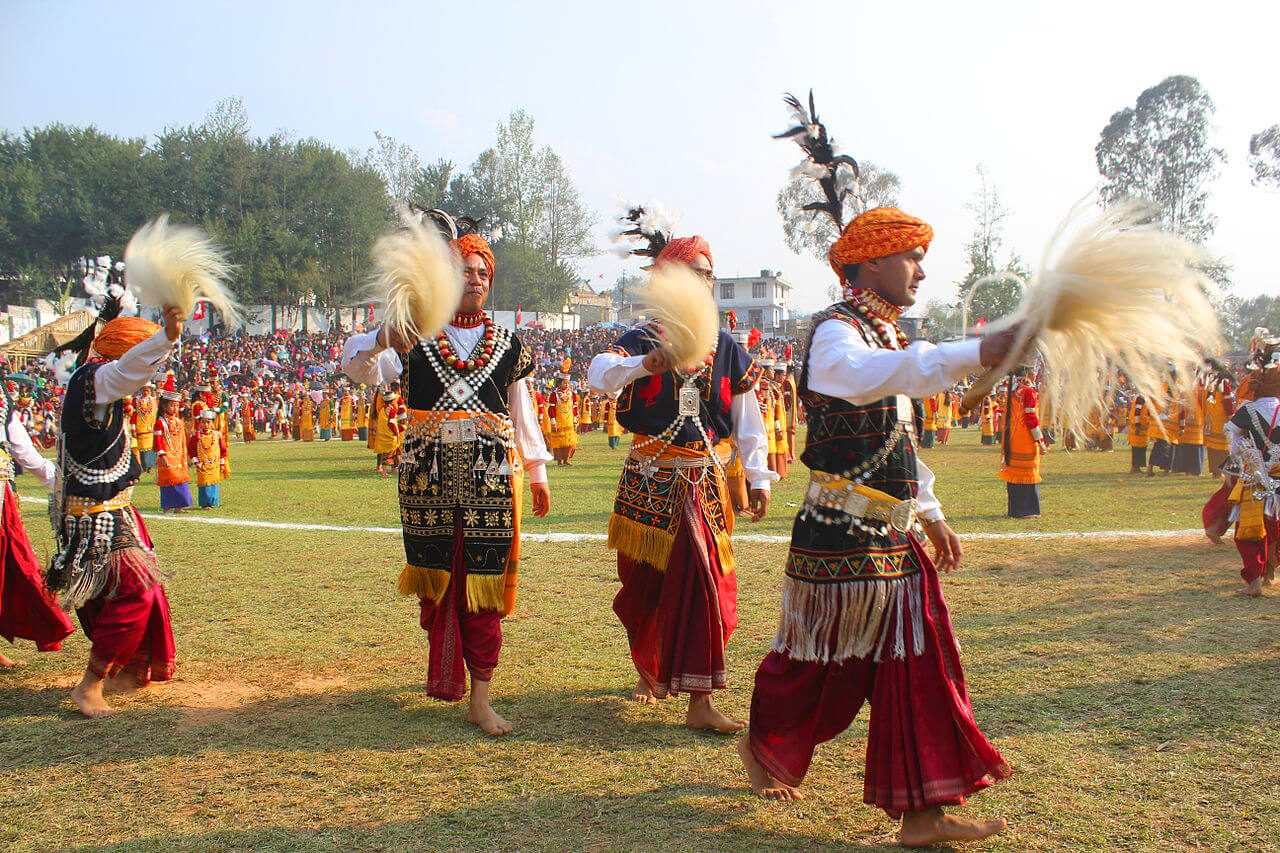
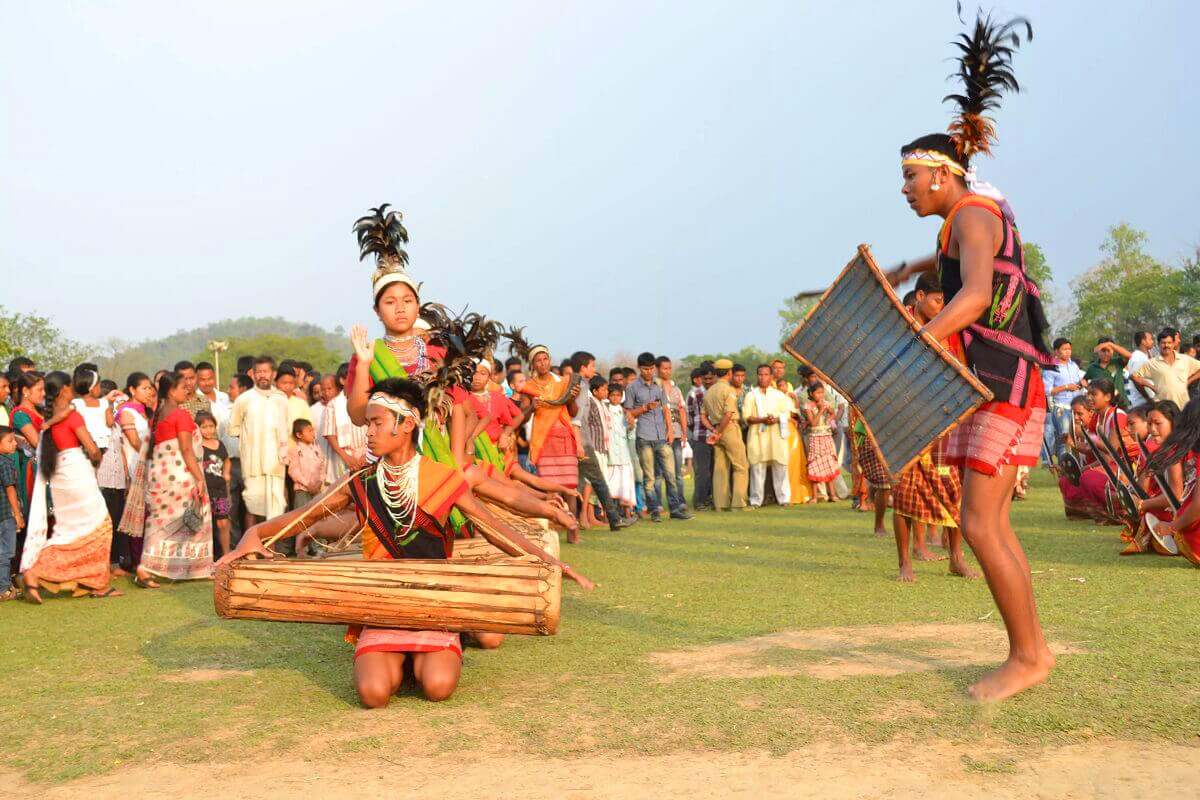
Wangala Dance features groups of men and women in full traditional Garo attire — women in Dakmanda silk wraps with elaborate beaded necklaces and bamboo headdresses, men in Gamagipa (warrior loincloth) with hornbill feather crowns — performing vigorously synchronized rhythmic patterns across a large performance ground. The dance involves precise, powerful foot stamping, coordinated arm movements, and the simultaneous playing of the Dama (long drum), Aduri (small drum), Rongdik (gong), and Gong (brass plate), creating an overwhelming sensory experience. The Wangala Festival at Asanang village draws over 10,000 spectators annually.
November (Annual)
Asanang & Tura
India's Best
Doregata Dance
Garo Courtship and Fun Folk Dance
Doregata Dance is the most lively and playful Garo folk dance of Meghalaya, performed during social gatherings, youth festivals, and light-hearted communal celebrations. It is traditionally associated with courtship rituals — young Garo men and women use the dance as a socially sanctioned avenue to interact, express interest, and build romantic connections.
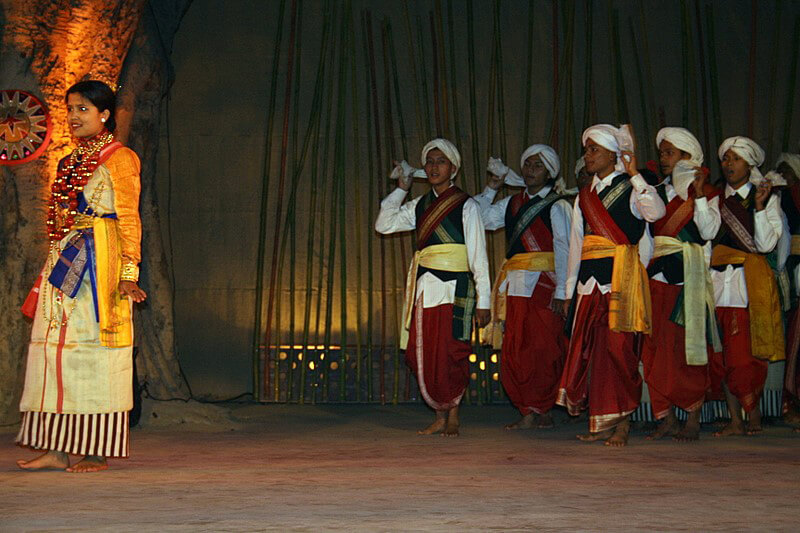
The dance is characterized by its fast-paced, lighthearted movements — quick footwork, playful glances between pairs, and teasing gestures — all set to an upbeat rhythm. Traditional Garo instruments like the Rongdik gong and Kal (bamboo flute) provide an infectious, toe-tapping musical backdrop. Young Garo women in bright Dakmanda wraps and flower garlands dance opposite groups of young men in colorful traditional attire. Doregata is an audience favorite at cultural tourism events and weddings, offering a joyful, participatory energy that makes it one of the most crowd-pleasing folk dances in Meghalaya.
Playful
Courtship
Youth
Ajmea Rewa Dance
Garo Dance of Celebration and Joy
Ajmea Rewa Dance is a vibrant celebration Garo folk dance of Meghalaya performed during communal feasts, family celebrations, and successful harvest seasons. The dance expresses the Garo concept of collective happiness — Rewa meaning "joyful energy" — and is intended to spread positive emotions across an entire community gathering.
Ajmea Rewa is a free-form, inclusive dance where community members of all ages join in concentric circular formations that expand as more participants enter. The movements build in intensity over time — from gentle swaying to vigorous jumping — reflecting the escalating communal joy of the gathering. Garo musicians play the Dama drum in accelerating tempos, driving the energy higher with each cycle. The costumes for Ajmea Rewa are brightly decorated with natural dyes, shells, and forest flowers, giving the performance a vivid, nature-inspired aesthetic. This exuberant folk dance of the Garo tribe is a perfect centerpiece for festive events and celebration banquets.
Celebration
Inclusive
Festive
Chachat Soa Dance
Victory Dance of the Garo Warriors
Chachat Soa Dance is a powerful victory folk dance of the Garo community in Meghalaya, traditionally performed after successful hunts, won battles, or resolution of inter-village conflicts. Chachat Soa translates literally to "Chicken Dance" — named after the Garo tradition of sacrificing a chicken during victory ceremonies as an offering of gratitude to nature spirits.
The dance is dominated by men in full Garo warrior attire — hornbill feather headgear, face markings, traditional weapons — performing aggressive, stomping movements that mimic battle sequences and hunting prowess. Dramatic leaps, spinning turns, and weapon displays form the visual centrepiece of the performance. The percussive music is intense and martial, with Dama drums and metal gongs played at maximum volume. Chachat Soa Dance is an extraordinarily striking performance that leaves audiences awe-struck — making it one of the most impactful Garo folk dances of Meghalaya for high-profile events and cultural showcases.
Warrior
Victory
High Energy
Rugala Dance
Harvest Dance of Garo Farming Communities
Rugala Dance is a traditional harvest folk dance of the Garo tribe in Meghalaya, performed by farming communities to celebrate the end of the paddy harvesting season. The dance gives physical form to the gratitude Garo farmers feel toward the land, the rain, and the nature spirits that made the harvest possible.
Rugala is performed in harvested paddy fields — the stubbled earth serving as the dance floor — with men and women dancing around large mounds of harvested rice. The movements imitate various stages of paddy cultivation: plowing, planting, weeding, and cutting — serving as a narrative of the entire agricultural year. The costumes are simpler than festival dances, reflecting working rural life, but are adorned with fresh paddy garlands and seasonal wildflowers. Traditional bamboo flutes and hand drums provide gentle, melodic accompaniment. Rugala Dance connects audiences deeply with Garo agrarian culture, making it an ideal performance for agricultural fairs, eco-tourism events, and cultural heritage programs focused on the folk traditions of Meghalaya.
Harvest
Agricultural
Nature
Do'Si Doa Dance
Traditional Dance of Garo Spiritual Life
Do'Si Doa Dance is a traditional Garo folk dance of Meghalaya performed during ceremonial occasions connected to Garo indigenous spiritual practices. The dance is part of the Songsarek (traditional Garo religion) ritual calendar and is performed to mark important transitions in Garo communal and spiritual life, including dedications of new homes, naming ceremonies, and seasonal worship.
The dance is characterized by flowing, circular movements performed around a central ritual object — typically a sacred pillar or ceremonial altar — representing the axis of Garo cosmology. Performers move in slow, deliberate patterns prescribed by Kamal (spiritual leaders), using hand gestures that reference Garo creation mythology. The musical accompaniment includes the haunting sound of the Asimba bamboo flute alongside gentle drum patterns. Do'Si Doa offers a profoundly meditative, spiritually grounded counterpoint to the more energetic Garo dances and is a distinctive option for cultural institutions and events interested in the contemplative dimensions of Meghalaya tribal folk dance.
Spiritual
Ceremonial
Meditative
Grika Dance
Warrior Dance of the Garo Tribe
Grika Dance is a martial folk dance of the Garo tribe in Meghalaya that dramatizes the warrior traditions and battlefield valor of Garo ancestors. Historically performed before and after military campaigns to invoke courage and celebrate bravery, Grika today serves as a powerful cultural performance that keeps the warrior heritage of the Garo people alive.
Male performers in full Garo warrior regalia — hornbill feather crowns, bamboo armor, traditional swords (Dao), and spears — enact choreographed combat sequences with extraordinary physical precision and theatrical intensity. The performance includes mock battles, defensive formations, pursuit sequences, and victory declarations, all narrated through movement and drumming. The Dama drum's rhythm functions as battlefield command signals — each pattern directing a different combat movement. Grika Dance is one of the most physically demanding and visually thrilling of all Garo folk dances of Meghalaya and is in high demand for national cultural festivals and premium stage productions.
Martial
Battle Drums
Intense
Matcha Dance
Community Dance of Garo Village Life
Matcha Dance is a community folk dance of the Garo people in Meghalaya, performed during village-level gatherings, inter-village cultural exchanges, and informal festive occasions. Matcha means "together" in the Garo language — perfectly capturing the essence of this inclusive, communal dance tradition.
Unlike the specialized warrior or ritual dances, Matcha is a dance for everyone — children, elders, men, and women participate together in gentle, welcoming formations. The movements are simple enough for newcomers to join but layered enough to reward experienced participants who add intricate footwork variations. Musicians play traditional Garo songs during Matcha, making the dance a vehicle for oral transmission of Garo folk music. The warm, participatory spirit of Matcha Dance makes it an exceptional choice for community outreach events, family gatherings, and cultural integration programs that seek to bring people together through the universal language of Meghalaya folk dance.
All Ages
Community
Folk Songs