Punjab — the Land of Five Rivers — has gifted India its most energetic and joyful folk dance traditions.
The folk dances of Punjab range from the thunderous harvest celebration of Bhangra to the tender
circle songs of Giddha, from the Sikh martial art of Gatka to the mystic seated movements of Julli. Born from
fields, weddings, harvests, and spiritual devotion, each Punjabi folk dance carries the irrepressible spirit
of a people who celebrate life at every turn. Whether you need performers for a wedding, a cultural festival,
or a corporate event, BookMyDance connects you with authentic Punjabi folk artists across India.
🥁 Bhangra
HarvestMenVaisakhi
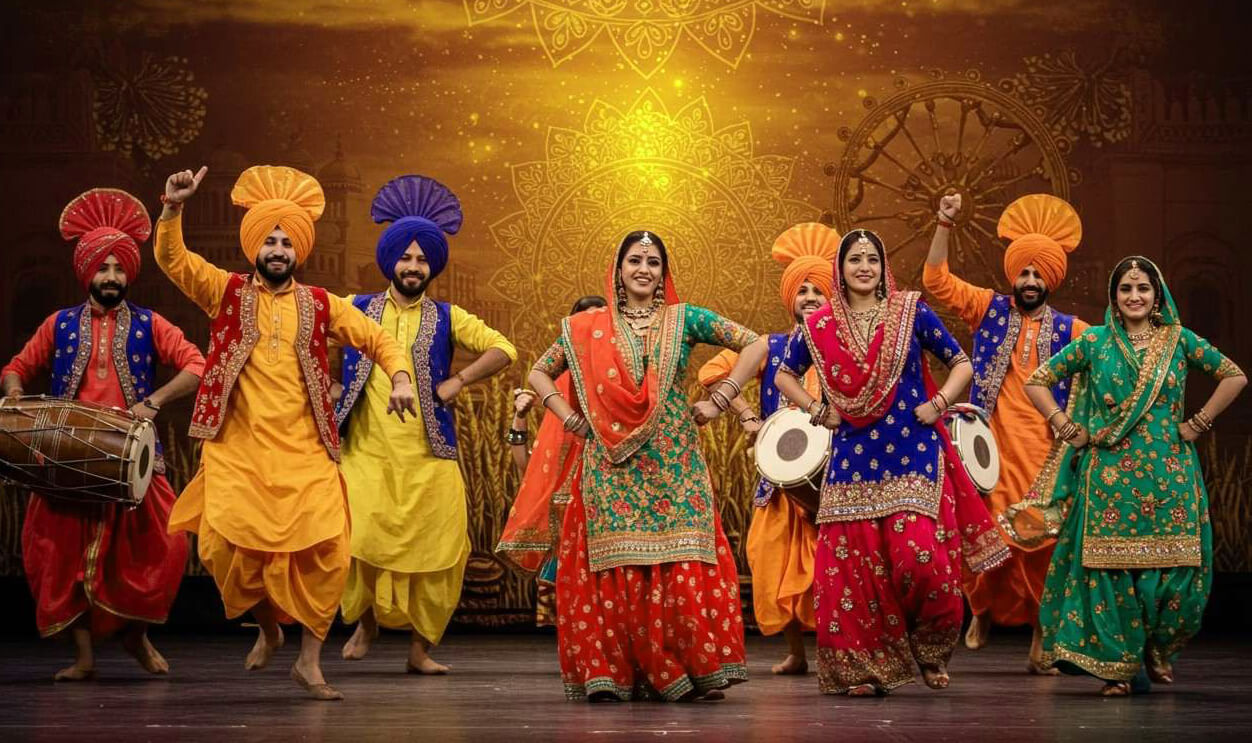
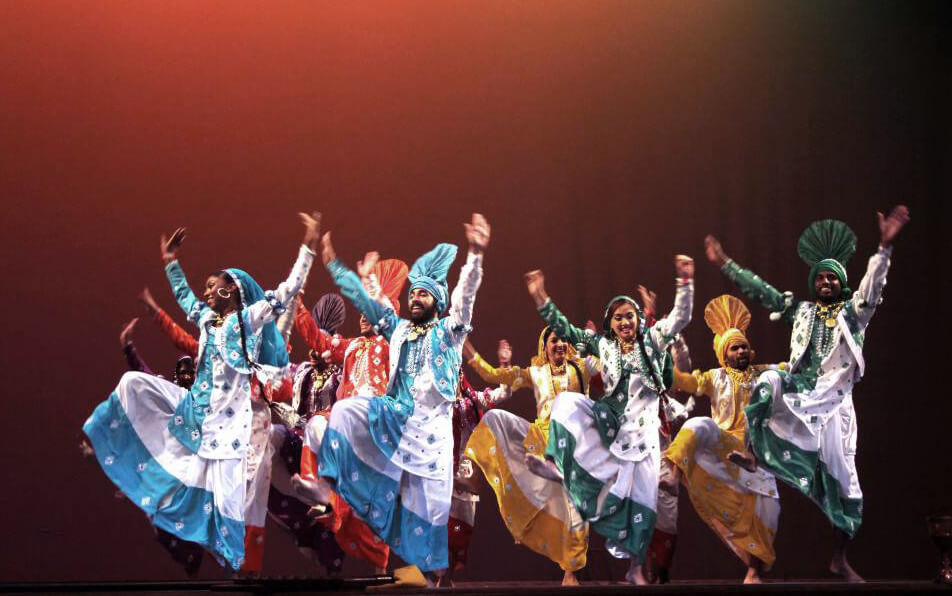
Bhangra is the king of all folk dances of Punjab — a high-energy harvest celebration
originating in the Sialkot region of undivided Punjab. Traditionally performed by farmers during the
Vaisakhi wheat-harvest season, Bhangra evolved from field movements into a full theatrical art form.
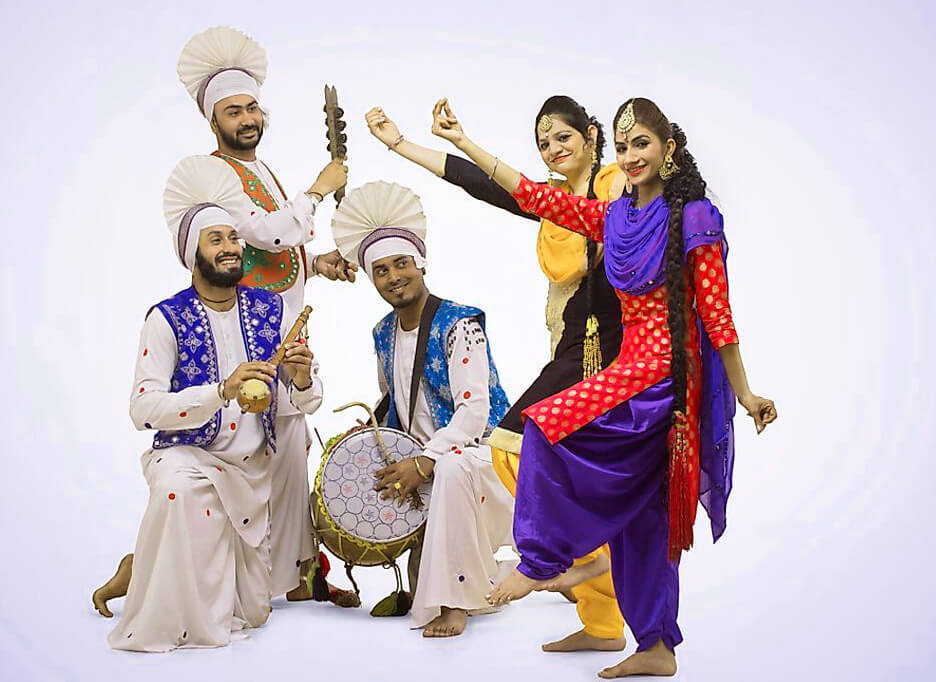
Male dancers form a circle around a dhol player, performing powerful leaps, shoulder-shaking (bhaj), and
vigorous footwork in synchronised bursts. Costumes feature bright kurtas, lungis, and colourful turbans.
Beyond harvest, Bhangra is now performed at weddings, sporting victories, and national celebrations —
and has conquered global stages from Bollywood to competitive dance circuits. It remains the most
recognised and widely booked Punjabi folk performance worldwide.
🌀 Luddi
MenVictoryWedding
Luddi is a celebratory folk dance of Punjab performed by men to mark victory, conquest,
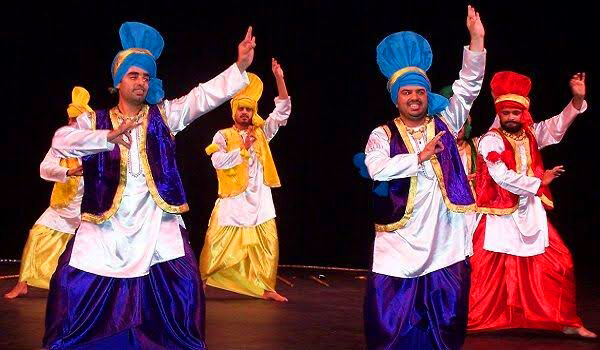
or festive occasions such as weddings. Dancers perform in circles, clicking fingers, clapping, jumping,
and executing half-turns — one hand placed behind the back and the other moving in snake-like undulations
at the front. The movements are fluid and graceful compared to the vigorous Bhangra, resembling a flowing
serpent in motion. Performed to the tunes of dhol and shehnai, Luddi can be performed in pairs or large
groups. Its association with triumph makes it a natural fit for sports celebrations, baraat processions,
and cultural events where energy and joy are the primary currency.
🕺 Malwai Giddha
MenMalwa RegionElderly
Malwai Giddha is a distinctive male folk dance of Punjab from the Malwa region —
encompassing the districts of Muktsar, Bathinda, Faridkot, Sangrur, Ferozpur, Mansa, and Patiala.
Originally performed by elderly men, it is the male counterpart to the women's Giddha but carries a
more dignified, measured quality — featuring expressive hand gestures, boliyan (couplets), and rhythmic
stepping in a circle. Malwai Giddha is deeply embedded in the agricultural and social life of the Malwa
belt and is performed at melas, weddings, and community gatherings. As a regionally specific
folk dance of Punjab, Malwai Giddha represents a tradition distinct from the widely
known Bhangra — valuable for cultural festivals seeking authentic regional diversity.
🥢 Dhankara
MenWeddingSticks
Dhankara — also called Gaatka Dance — is a ceremonious folk dance of Punjab performed
primarily at wedding celebrations. The name derives from daang, meaning stick, and the dance
requires at least two performers holding colourful sticks (of various hues) and tapping them together
in rhythm with the dhol. Dancers form a circle and move in structured patterns, striking sticks with
each rotation — drawing comparison to Gujarat's Dandiya. Men wear vibrant turbans of different colours
and may tie decorative bands at the waist. Women participate separately in some traditions. As a
sub-form of Bhangra, Dhankara is joyful, social, and visually appealing — a reliable entertainment
choice for wedding processions and cultural showcases across Punjab.
🎊 Dhamal
FestivalMenGroup
Dhamal is an exuberant male folk dance of Punjab — closely related to Bhangra in form
but performed with even greater abandon and collective joy. Men stand in a continuously moving small
circle and dance enthusiastically to the dhol, raising both hands skyward at expressive peaks. The name
itself connotes chaos and euphoria — dhamal machana means to create joyful uproar in Punjabi.
Dhamal is particularly associated with religious festival settings and open-air melas, where the
absence of formal structure allows spontaneous participation. As a sub-form within the Bhangra family,
Dhamal represents the purest, most uninhibited expression of Punjabi folk joy — raw, communal, and
completely unscripted.
🙏 Julli
SufiMenSpiritual
Julli (also called Jalli) is a deeply spiritual folk dance of Punjab performed
exclusively by Muslim holy men — Pirs — at their hermitages (khangahs). Unlike the vigorous physical
dances of the Bhangra family, Julli is performed while seated, with the dancer holding a thick stick and
swaying rhythmically in devotional trance. Performers wear entirely black attire — black kurta and black
scarf — and sometimes dance around the grave of a revered preceptor. The subdued, meditative character
of Julli reflects the Sufi spiritual tradition of annihilation of ego through devotional movement.
As one of the most unique folk dances of Punjab, Julli offers a rare window into the
Islamic mystical heritage woven into Punjabi cultural life.
⚔️ Gatka
SikhMartial ArtMen
Gatka is the martial arts folk dance of Punjab, intrinsically associated with the Sikh
community. A form of stick-fighting where wooden sticks simulate swords in combat choreography, Gatka
also uses shields (phari), daggers, and spears in elaborate performance sequences. Its theory and
techniques were codified by the Sikh Gurus, battle-tested across centuries of Sikh history. Today Gatka
is performed as a spectacular display art at Sikh festivals including Holi and Gurpurbs — performers
execute swift attack-and-defence sequences, jumps, spins, and weapon flourishes with breathtaking
precision. Gatka performances carry tremendous visual power and are sought for cultural festivals,
heritage programmes, and events celebrating Punjabi Sikh identity and warrior tradition.
🌾 Jhumar
MenWeddingLyrical
Jhumar is a slower, deeply rhythmic folk dance of Punjab originating in the Sandalbar
region — also called Ghumbar locally. The name derives from jhoom/jhum, meaning to sway, and
the dance is characterised by graceful swaying movements performed in a circle to emotional Punjabi folk
songs. Traditionally a wedding dance, Jhumar's unhurried, lyrical quality contrasts sharply with the
explosive energy of Bhangra. After Partition, Jhumar faded from Indian Punjab but survived in parts
of Ferozepur district among Rai Sikh migrants from Pakistan. Its melodic, contemplative mood makes
Jhumar one of the most musically expressive folk dances of Punjab — performed to
songs of longing, love, and seasonal celebration.
🤼 Karthi
HarvestMixedRitual
Karthi is a ritual mixed-gender folk dance of Punjab performed at harvest time,
beginning with offerings to the presiding deity before the dance commences. The performance incorporates
sentimental songs about battles, victories, and romantic relationships — accompanied by folk instruments
including the shehnai. Karthi has a ceremonial dimension absent from purely celebratory dances like
Bhangra — it marks the sacred relationship between the community and the land that feeds them. Performed
in open fields after the harvest is brought in, Karthi embeds thanksgiving into movement and music.
As a lesser-known folk dance of Punjab, Karthi is sought by cultural festivals and
folk arts programmes that prioritise authentic, regionally specific performance traditions over the
more commercially prominent forms.
🎤 Giddha
WomenBoliyanFestival
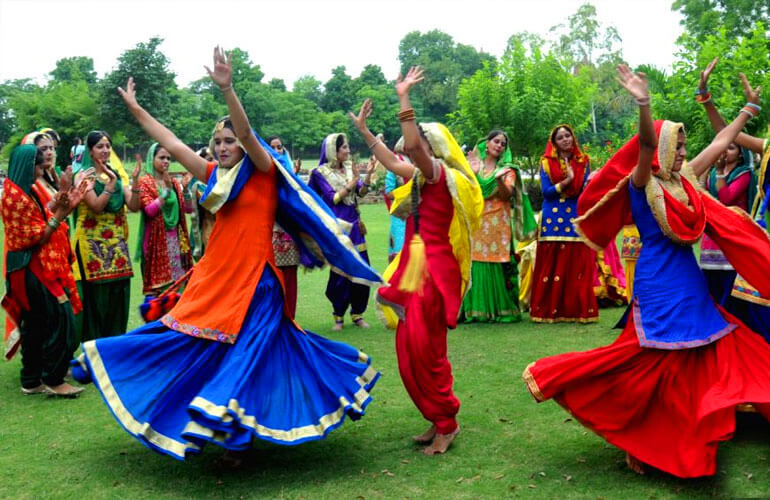
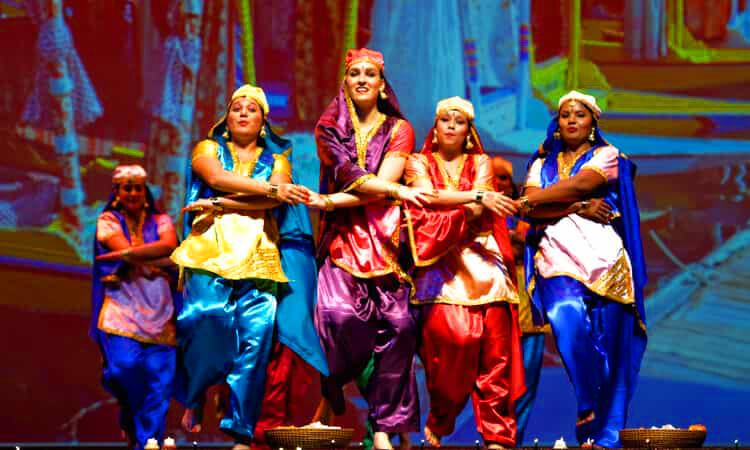
Giddha is the female counterpart to Bhangra and the most beloved women's folk dance of
Punjab. Originating in West Punjab's ring-dance tradition, Giddha is performed in a circle
where women take turns entering the centre to enact dramatic boliyan — short, witty folk couplets
covering topics ranging from love and marriage to social commentary and teasing of elders. Performers
wear bright salwar kameez or ghagras with heavy jewellery, their hair in two braids with a tikka on
the forehead. The dholki (small drum) provides the rhythmic base. Giddha's unique combination of dance,
poetry, and theatre gives it an expressive range unmatched by any other folk dance of
Punjab — performed at weddings, Teej, Vaisakhi, and women's cultural celebrations.
🌊 Sammi
WomenTribalCircle
Sammi is a traditional women's folk dance of Punjab from the tribal belt of the
Sandalbar and Pothohar regions of undivided Punjab. Dancers wear bright coloured kurtas and full
flowing lehengas, with a distinctive silver hair ornament unique to this dance form. Performed in a
circle, dancers swing their hands from the sides and bring them forward in a slow, fluid rhythm —
incorporating a hopping sequence and sometimes using sticks as props. Sammi has a gentle, graceful
quality — less vigorous than Giddha — and is deeply connected to the folk songs of longing associated
with the Punjab river landscape. The popular Coke Studio track Sammi Meri Waar introduced
this Punjab folk dance to a new generation globally.
🔵 Kikli
GirlsPairsPlayful
Kikli is a joyful, playful folk dance of Punjab performed by young girls — typically
in pairs, sometimes in groups of four. Two girls stand face to face, cross their arms, firmly interlock
hands, lean back to full arm extension, and spin each other at speed — their colourful dupattas and
odhnis flying outward while anklets create a tinkling melody. The centrifugal spinning requires both
trust and coordination. Traditional Kikli songs are sung with clapping throughout the performance.
The dance reflects the carefree, playful side of Punjabi girlhood — performed in courtyards, at
festivals, and during leisure time. Simple in its requirements but visually charming, Kikli is one
of the most recognisable folk dance images from Punjab.
🏮 Jaago
WomenWeddingNight Ritual
Jaago — meaning "wake up!" — is a pre-wedding night folk dance of Punjab performed
exclusively by women. When a marriage is announced in a household, women of the family dance through
the village streets carrying a decorated pot (gaggar) lit with candles, singing Jaago songs that
announce the approaching wedding to the entire neighbourhood. The songs are social and spirited —
full of gentle teasing aimed at relatives and elders, announcing the bride or groom's name, and
calling households to celebrate. The candlelit procession through dark village lanes creates a
magical, communal atmosphere. Jaago represents the collective joy of women's celebration in Punjabi
culture — a living tradition performed the night before every traditional Punjabi wedding.
🌊 Jindua
MixedLove SongsCommunity
Jindua is a mixed-gender folk dance of Punjab performed to folk songs expressing love,
longing, and the joys of togetherness. Unlike the gender-segregated forms of Bhangra and Giddha, Jindua
allows men and women to participate together in community celebrations — reflecting a more open social
tradition in certain Punjabi communities. The dance is characterised by fluid movements, expressive
gestures, and call-and-response singing between male and female groups. Accompanied by traditional
instruments including the dholki and algoza (double flute), Jindua has a lyrical, intimate quality
that sets it apart from the more vigorous folk dances of Punjab. It is a rare and
valuable representation of the inclusive, communal dimension of Punjabi folk culture.
🕌 Dhamal (Sufi)
SufiDevotionalTrance
Sufi Dhamal is a devotional folk dance of Punjab distinct from the festive Bhangra-style
Dhamal, performed at Sufi dargahs (shrines) as an act of spiritual surrender and ecstasy. Devotees
spin, sway, and move in trance-like states to the qawwali or dhol music playing at the shrine —
particularly popular at the dargahs of Data Ganj Bakhsh in Lahore and other major Sufi saints of the
Punjab region. Unlike other folk dances, Sufi Dhamal has no fixed choreography — it is pure spiritual
expression, the body becoming the instrument of devotion. This mystical dimension of Punjabi folk
performance represents a centuries-old tradition where dance is prayer, making it uniquely powerful
for cultural documentary, spiritual tourism, and heritage arts programming.