Doregata Dance – Traditional Folk Dance of Meghalaya
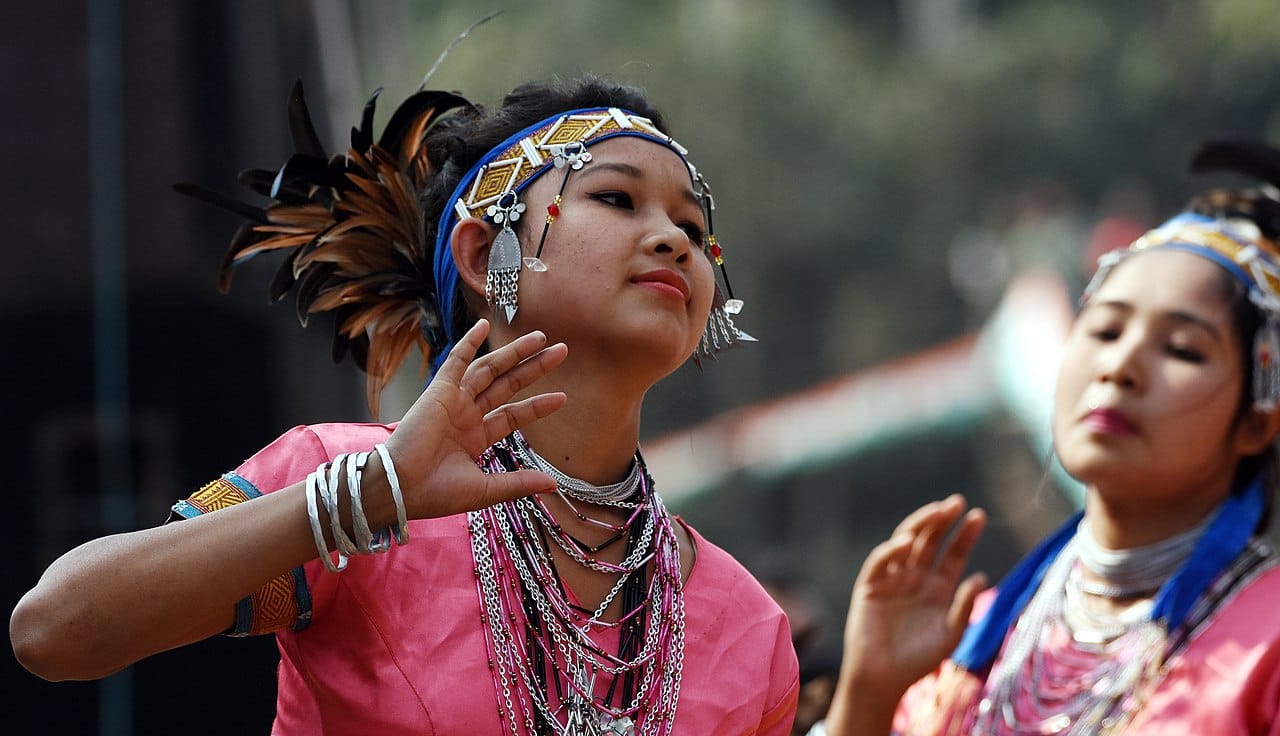
The Doregata dance is one of the most delightfully unusual traditional folk dances of Meghalaya, the "abode of clouds" in Northeast India. Instead of a solemn ritual, Doregata turns dancing into a cheerful contest: the women dancers try to butt the turbans off the heads of the male dancers — and every successful knock is greeted with great cheering and laughter from the spectators. Recorded by the Meghalaya Government's Department of Arts and Culture as the Dore Rata Dance, it captures what makes Meghalaya's folk culture so engaging: community, humour and joy shared between dancers and audience. Here you can explore its history, significance and performance style — and learn how to book Doregata dance performers with BookMyDance.
What Is Doregata Dance?
Doregata is a folk dance from Meghalaya in which men and women dance together in traditional festive dress, and the women playfully attempt to knock the turbans from the heads of their male partners using their own heads. That single idea — a dance built around a cheerful bout of turban-knocking — is what gives Doregata its unmistakable character among the traditional folk dances of Meghalaya.
Nothing about the contest is hostile — it is a game embedded in a dance, the kind of friendly contest that turns a row of spectators into a cheering crowd. Because of this audience-driven energy, Doregata is as much spectator entertainment as it is dance. It sits alongside Meghalaya's better-known traditions — the stately Khasi Shad Suk Mynsiem, the hundred-drum Wangala festival dance of the Garos and the communal Laho dance of the Pnar people — as a reminder that the state's folk heritage ranges from dignified ritual to open-hearted play.
History and Origin of Doregata Dance
What is reliably documented about Doregata's history is limited but meaningful. The Meghalaya Government's Department of Arts and Culture describes the Dore Rata Dance — the same dance under its alternative spelling — among the traditional festivals and ceremonies of Meghalaya, noting that the women dancers try to butt the turbans off the heads of the male dancers, each knock greeted with great cheering and laughter from spectators. State tourism and cultural writings likewise describe Doregata as a traditional folk dance of Meghalaya in Northeast India.
Beyond these descriptions, the dance's deeper history remains undocumented in the public record. No authoritative source records when Doregata first appeared, who created it, or the exact occasion on which it was traditionally performed — a common situation for Meghalaya's oral folk traditions, where dances were passed down through practice rather than written record. Honest research also means acknowledging what the sources leave open: the government's documentation groups the Dore Rata Dance among Garo festival traditions, while some cultural publications describe Doregata as performed by the Khasi people. Rather than resolve that disagreement by guesswork, it is more accurate to say that Doregata is a folk dance of Meghalaya's indigenous communities whose community attribution varies between reliable references.
Documented facts
Recorded by the Meghalaya Government's Department of Arts and Culture as the Dore Rata Dance; women dancers knock the turbans off male dancers' heads; spectators greet each knock with cheering and laughter; alternative spellings Doregata and Dore Rata are both in use.
Not established by sources
An exact origin date, place or founder; a fixed festival association; a specific religious meaning; and a definitive single-community attribution — the government source places it among Garo traditions while some cultural publications associate it with Khasi performance.
Cultural Significance of Doregata Dance
Folk dances survive because they do something a community values. In Doregata's case, the value is easy to see: it is a celebration designed to be enjoyed together. The dance brings men and women into playful, good-humoured interaction on the dance ground, dissolves the distance between performer and spectator, and fills a festival gathering with laughter — a shared emotion that binds the community as surely as any solemn rite.
The Doregata dance's significance, then, lies in three things at once. It is traditional entertainment — a performance whose entire point is delight. It is social interaction — a friendly contest between dancers that reflects the community's ease with itself. And it is cultural identity — one thread in Meghalaya's indigenous performing arts, kept alive each time an audience responds the way Doregata audiences always have: with cheering and laughter. Preserving such dances — by performing, teaching and respectfully presenting them — keeps an irreplaceable part of Northeast India's cultural memory alive.
How Is Doregata Dance Performed?
Every Doregata performance is built around the same recognisable idea, and it unfolds something like this:
-
The dancers gather in traditional dress
Male and female dancers come together in festive community attire, with the male dancers wearing turbans on their heads — the headwear that gives the dance its central game.
-
The dance begins
The group dances together in the celebratory style of Meghalaya's folk traditions, to the music of the occasion.
-
The turban-knocking contest
While the dancing continues, the women attempt to butt the turbans off the men's heads using their own heads — a playful contest of timing and nerve woven into the dance itself.
-
The audience joins the celebration
Each time a turban is knocked off, spectators greet the moment with great cheering and laughter. The crowd's reaction is part of the performance, not a background to it.
What the sources do not record is a fixed choreography — no authoritative written notation exists, which is normal for a living folk tradition. Village performances naturally vary, and the dance lives in the playful interaction rather than a standardised routine.
Doregata Dance Steps and Performance Style
The movement style of the Doregata folk dance of Meghalaya is defined by its signature head movement: the quick, well-timed butt with which a woman dancer tries to knock her male partner's turban off while the dance is in motion. It is this element — skill in the playful contest, timing, and the ability to keep dancing throughout — that performers are remembered for.
Beyond the turban-knocking action, no verified step-by-step choreography for Doregata has been published. Descriptions emphasise its lively, energetic and cheerful character rather than a fixed step vocabulary, and different community performers may dance it in different ways — so treat any precise "official steps" claim with caution and confirm the movement style directly with knowledgeable Doregata performers.
Traditional Costume Used in Doregata Dance
The one element of Doregata costume that every reliable source confirms is also the one the dance cannot do without: the turban worn by the male dancers. It is not decoration — it is the object of the entire contest. A Doregata performance without turbaned male dancers simply would not be Doregata.
For the rest of the attire, the dependable description is a general one: dancers wear the traditional festive dress of Meghalaya's communities, the clothing worn at local celebrations. Verified accounts of the full Doregata costume — specific garments, colours, textiles and ornaments — are scarce in public records, and borrowing descriptions from other Meghalaya dances such as Shad Suk Mynsiem would be misleading. What can be said is the role attire plays: traditional dress signals the performance's cultural identity, gives the dancers their festive stage character, and — in the case of the turbans — sets the game in motion. For authentic presentations, costume specifics should be confirmed with the community performers themselves.
Music and Instruments Used in Doregata Dance
Here honesty matters more than completeness. The government cultural documentation that describes Doregata's turban-knocking performance does not record the instruments or musical arrangements that accompany the dance, and no reliable Doregata-specific source we found does either. Meghalaya's folk traditions commonly feature drums, gongs, flutes and community singing, but naming a particular instrument list for Doregata would mean borrowing it from other dances — and this page will not do that. For event organisers, the responsible note is simple: confirm the musical arrangement with knowledgeable performers when planning a presentation, because they can describe the authentic setting better than any secondhand description.
Doregata Dance in Meghalaya's Culture and Traditions
Meghalaya is home to three major tribal communities — the Khasi, the Jaintia (Pnar) and the Garo — each keeping its own treasury of festivals and dances. State cultural documentation describes everything from the dignified Khasi dances and the Garos' hundred-drum Wangala to the Jaintia Behdienkhlam celebration and lighter communal forms like the pomelo-spinning Chambil Mesara, which appears alongside the Dore Rata Dance in the government's own festival records.
Within that landscape, Doregata holds a distinctive place: it is the tradition that makes an audience laugh out loud. Where many of Meghalaya's dances express devotion, thanksgiving or ceremony, Doregata expresses joy in its most direct form — a community playing together. That makes it a favourite in cultural showcases, where its humour needs no translation and its energy lands instantly with first-time audiences.
Doregata Dance Performance for Events
A Doregata-inspired cultural presentation brings the warmth and humour of Meghalaya's folk heritage to audiences far from the hills. Its playful contest, traditional attire and instant audience appeal make it a memorable addition to suitable occasions — always subject to performer availability and planned with respect for the tradition's cultural roots. Typical modern presentation opportunities include:
Cultural festivals
A crowd-pleasing folk showcase segment with instant audience participation.
Traditional celebrations
Festive occasions where community joy and laughter belong at centre stage.
College & university programmes
Engaging Northeast India representation for youth and campus audiences.
Tourism & cultural showcases
An authentic glimpse of Meghalaya's living traditions for visitors and guests.
Government cultural events
State and national programmes celebrating India's indigenous performing arts.
Corporate cultural programmes
A distinctive, high-energy tradition for diversity and cultural celebrations.
These are potential presentation occasions, not claims about where the dance was traditionally performed. The format, group size and presentation style for each event should be planned with the performers so the tradition is represented authentically.
Book Doregata Dance Performers with BookMyDance
Planning a cultural programme and want Meghalaya's most playful folk tradition on your stage? BookMyDance helps event organisers discover and coordinate traditional folk dance performances across India, including:
- Availability confirmation — authentic community performers are limited in number; availability is confirmed individually for each event date and city.
- Event-specific planning — duration, format and narration suited to your audience and occasion.
- Artist coordination — group size, performer requirements and travel logistics handled with the artists.
- Stage and venue guidance — space and floor requirements for a group folk presentation.
- Costume and music coordination — attire and musical arrangements confirmed with the performers for authenticity.
- Advance scheduling — early booking strongly recommended for seasonal and festival-period events.
Share your event date, city and audience profile with our team through the BookMyDance contact page, and we will confirm what is possible — including suitable alternatives from Meghalaya's other traditional dance forms where appropriate.
Book Doregata Dance Performers
Tell us about your event — date, city and audience — and our team will confirm availability and plan a respectful, authentic presentation with you.
Book Doregata Dance PerformersWhy Choose BookMyDance for Cultural Dance Performances?
BookMyDance is a dedicated dance booking platform covering India's classical, folk and tribal traditions — including a directory of Meghalaya's cultural dance artists. Event organisers choose BookMyDance for its breadth of traditions, its cultural honesty — each tradition presented accurately, with availability confirmed openly rather than overpromised — its coordination support for format, group size, stage needs and scheduling, and its commitment to respectful, authentic presentation.
Frequently Asked Questions About Doregata Dance
What is Doregata dance?
Doregata dance is a playful traditional folk dance of Meghalaya in which women dancers attempt to knock the turbans off the heads of the male dancers using their own heads while dancing. The Meghalaya Government's Department of Arts and Culture records it as the Dore Rata Dance, and notes that each successful knock is greeted with loud cheering and laughter from the spectators.
Where did Doregata dance originate?
Doregata dance is documented as a traditional festival dance of Meghalaya in Northeast India. The Meghalaya Government's Department of Arts and Culture describes the Dore Rata Dance among the festival traditions of the Garo community, while some cultural publications associate its performance with the Khasi community. No authoritative source records a precise place, date or founder of origin, and the dance's early history has not been formally documented.
Which community is associated with Doregata dance?
Reliable references differ on this point. The Meghalaya Government's Department of Arts and Culture lists the Dore Rata Dance among the festivals and ceremonies of the Garo community, while other cultural publications describe it as performed by the Khasi people. Because credible sources disagree, it is safest to describe Doregata as a traditional folk dance of Meghalaya's tribal communities rather than attribute it with certainty to a single tribe.
What is the cultural significance of Doregata dance?
Doregata dance is significant as a form of community celebration and traditional entertainment. Its playful turban-knocking contest brings male and female dancers together in friendly interaction, invites the audience to cheer and laugh along, and strengthens social bonds at festivals and gatherings. Like Meghalaya's other folk traditions, it also helps preserve the state's indigenous performing arts for younger generations.
How is Doregata dance performed?
In the documented performance style, male and female dancers dance together while wearing traditional attire, with the male dancers wearing turbans. As the dance proceeds, the women attempt to butt or knock the turbans off the men's heads using their own heads, and every successful knock is met with great cheering and laughter from the spectators. Exact formations and choreography vary, and no standard written step notation exists for the dance.
What costumes are worn during Doregata dance?
The one element consistently documented is the turban worn by the male dancers, which is central to the dance itself because the women attempt to knock it off. Beyond that, performers wear the traditional festive attire of their community. Detailed, verified descriptions of the full Doregata costume are scarce in public sources, so specifics of dress and ornamentation are best confirmed with knowledgeable community performers.
Can I book Doregata dance performers for an event?
Yes. BookMyDance helps event organisers arrange Doregata-inspired cultural presentations by Meghalaya performers for cultural festivals, college and university programmes, tourism showcases, government events and corporate cultural programmes. Availability of authentic community performers should be confirmed in advance — share your event date, city and audience profile through the BookMyDance contact page and the team will confirm what is possible.
What types of events can feature a Doregata dance performance?
Doregata dance presentations can suit cultural festivals, traditional celebrations, college and university cultural programmes, tourism and cultural showcases, government cultural events, corporate cultural programmes and special stage performances. These are modern presentation opportunities rather than the dance's original setting, so the performance format should be planned respectfully with the performers.