Khamba Thoibi Dance
The signature love dance of Moirang, depicting the legendary romance of Khuman Khamba and princess Moirang Thoibi before the deity Thangjing. Among the most celebrated traditional dances of Manipur.
Manipur's folk and traditional dances hold centuries of Meitei and tribal storytelling, ritual music and community expression. Discover Khamba Thoibi, Lai Haraoba, Maibi and other classic traditions, and book authentic Manipur folk performers for cultural events across India.
Book Manipur Folk DancersFolk dance of Manipur is more than performance. It is the living memory of the valley and the hills — a tradition that carries legends of kings and lovers, voices of priestesses, rhythms of the pung drum and cymbal, and the everyday joy of community celebration.
Manipur sits at the cultural crossroads of mainland India and Southeast Asia. The Meitei people of the Imphal Valley and the many tribal communities of the surrounding hills — Naga, Kuki, Hmar, Chin-Kuki-Mizo and others — have each contributed rich traditions of music, costume and movement that today form the folk dance culture of the state.
From the love legend of Khamba and Thoibi in Moirang to the ritual invocation of forest deities by Maibi priestesses during Lai Haraoba, Manipur traditional dance forms preserve a distinctive world view: gentle, devotional, rhythmically rich and deeply tied to community life.
Most folk dances of Manipur begin inside the community. Harvests, marriages, temple festivals and seasonal rites are the natural stage where these forms have been preserved for generations. Elders sing, drummers set the rhythm and dancers step into the circle not to perform for an audience but to keep their village close to its gods and ancestors.
That community-rooted character is what gives Manipur folk dance its quiet dignity. Unlike flashier stage traditions, folk forms here emphasise graceful footwork, upright posture, hand coordination with music, and circular or processional formations. The result feels less like a "show" and more like a continuation of long-running ritual and social life — which is why these performances resonate so strongly on cultural festival stages.
For event planners, this means booking a Manipur folk dance troupe is not just adding colour to a programme. It brings a complete cultural package — meaningful gestures, traditional costume, live music and an aesthetic that fits serious cultural programming, not only entertainment segments.
The folk dance of Manipur spans love legends, ritual invocations, devotional drumming and community gatherings. Here are the most recognised forms event organisers and cultural enthusiasts ask about.
The signature love dance of Moirang, depicting the legendary romance of Khuman Khamba and princess Moirang Thoibi before the deity Thangjing. Among the most celebrated traditional dances of Manipur.
A ritual festival of the Meitei community combining dance, music and ceremony. Led by Maibi (priestesses) and Maiba (priests), it re-stages the creation of the world and the life of deities through dance.
A shamanic ritual dance performed by Maibi priestesses, especially during Lai Haraoba, to invoke and honour forest and nature deities. One of the most spiritually distinctive folk dance traditions of Manipur.
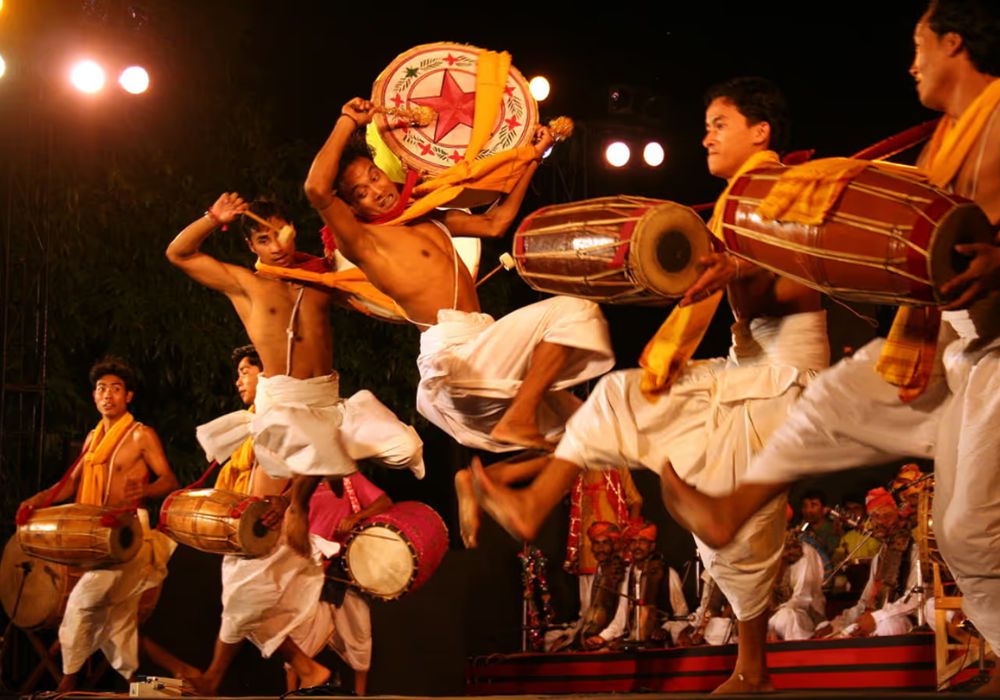
The drum dance of Manipur performed by pung (drum) players, blending acrobatic rhythm with graceful movement. Widely associated with Manipuri classical tradition but famous across India for its hypnotic energy.
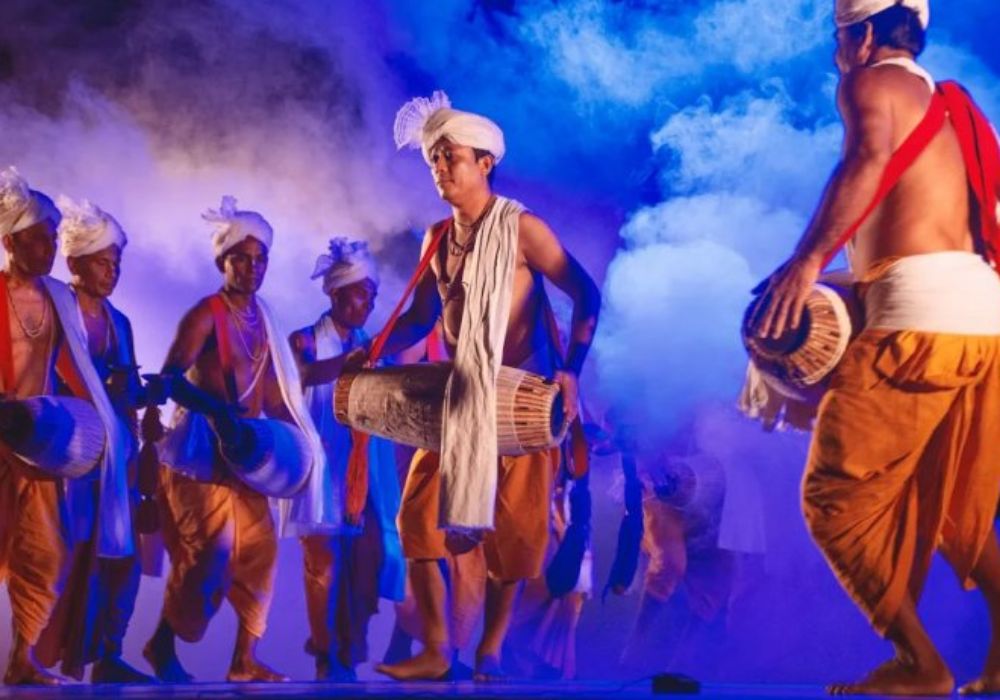
A cymbal dance of Manipur traditionally performed by male dancers, often sitting, with rhythmic coordination between small brass cymbals and expressive gesture. Part of the broader Sankirtana tradition.
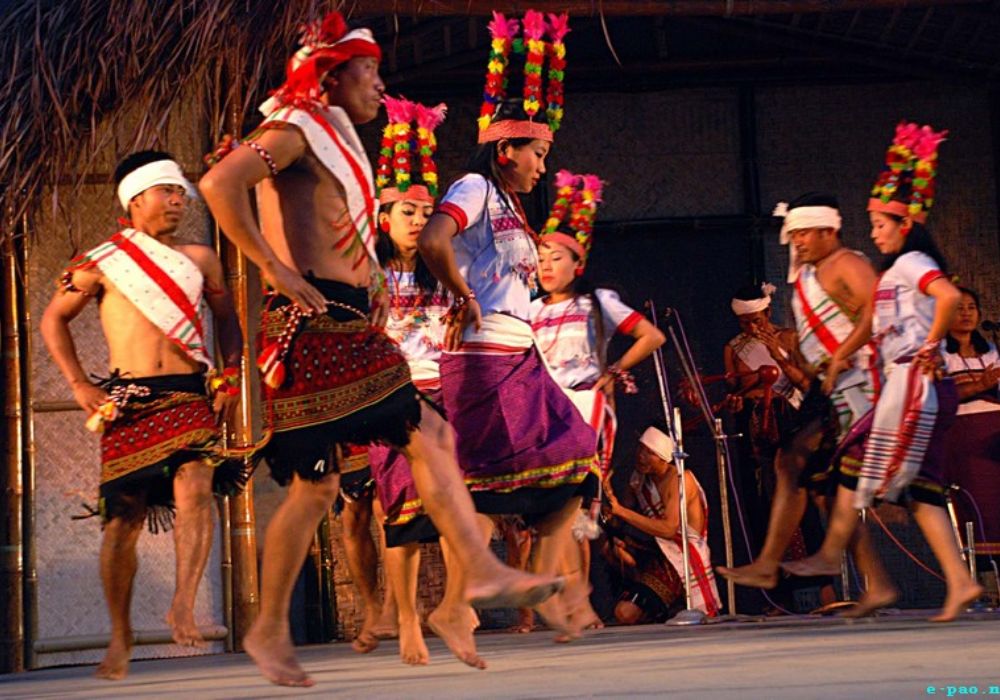
Manipur's hill communities — including the Naga, Kuki-Chin, Hmar and related tribal groups — have their own vibrant folk dance traditions featuring community circles, harvest celebrations and bamboo footwork.
The Khamba Thoibi dance (Khamba Thoibi Jagoi) is rooted in the legend of Khuman Khamba, a hero of the ancient Moirang kingdom, and Moirang Thoibi, the princess he loved. According to tradition, the dance was first performed by Khamba and Thoibi in the presence of the god Thangjing, and it has remained a powerful community expression of love, longing and devotion ever since.
In performance, Khamba dances with restrained masculine vigour — controlled footwork, dignified gesture and steady posture. Thoibi moves with the soft, lyrical grace that Manipuri dance is famous for. Their pair dance, around a small bronze mound (the laiching jatra) believed to hold the spirit of Thangjing, is both a love duet and a prayer.
The dance is regularly staged across India today at cultural festivals such as the Khajuraho Dance Festival, and forms a centrepiece of many North-East cultural programmes. It is, alongside Lai Haraoba, one of the two traditions most often asked about by event organisers planning Manipur-themed cultural evenings.
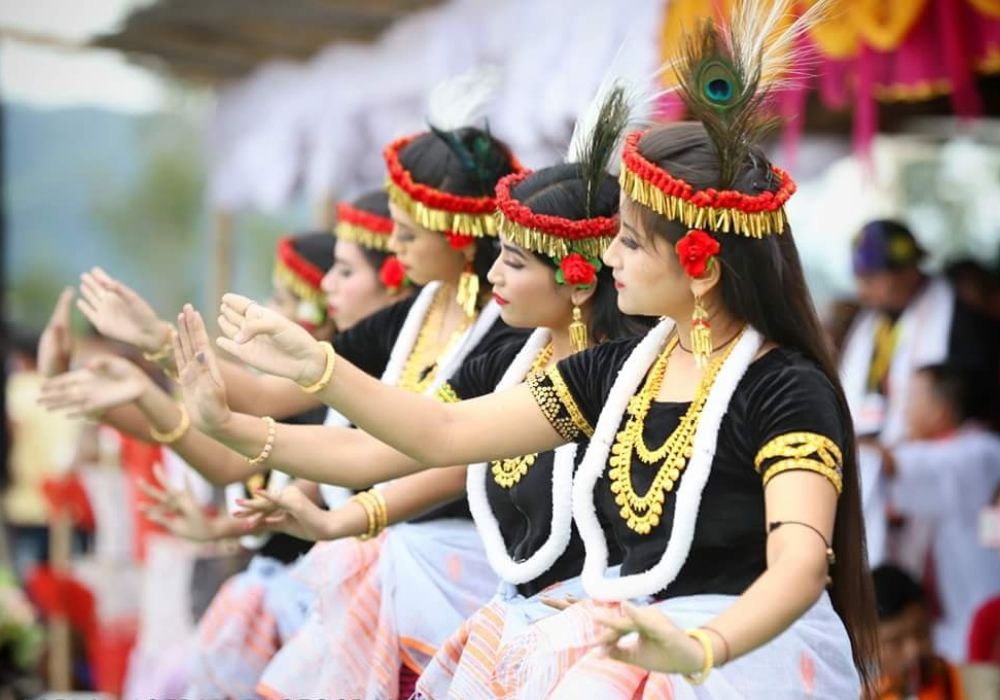
Movement: Khamba Thoibi balances masculine and feminine energies. The male dancer focuses on upright dignity with rhythmic footwork; the female dancer performs the famous Manipuri graceful glide, with subtle bending of the knee and torso.
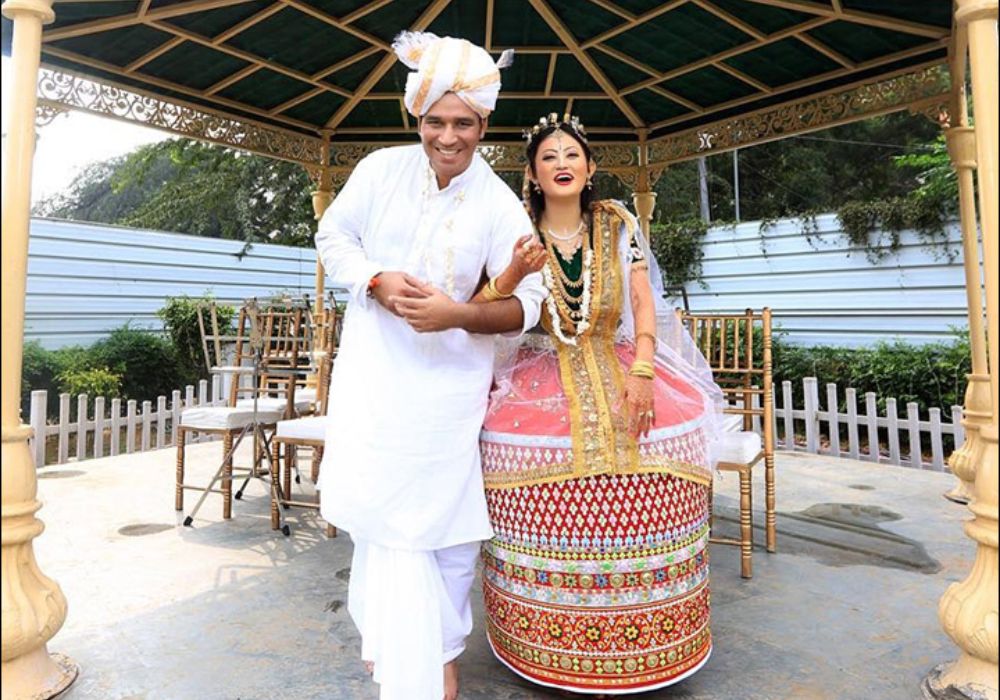
Costume: The Thoibi character wears a richly embroidered phanek-style skirt, ornamental waist-band, white hair-bun decoration and traditional ornaments. The Khamba character wears a dhoti with a decorative waist cloth and head ornament, often with flowers.
Music: Performances are accompanied by the pung (barrel drum), pena (fiddle), kartal (small cymbals) and vocal chorus. The patterns are devotional and meditative rather than loud, which is why Khamba Thoibi fits both stage and intimate cultural settings.
Modern stage: Khamba Thoibi is widely adapted for cultural evenings, North-East festivals and fusion programming. It is often paired with a short Lai Haraoba excerpt or a folk group number on the same event.
Lai Haraoba, also called Umang Lai Haraoba, is one of Manipur's oldest living festivals. It translates roughly as "the merry-making of the deities", and is celebrated annually by the Meitei community across the Imphal Valley during the summer months.
At the centre of the festival stand three ritual functionaries: the Maiba (male priest), the Maibi (female priestess) and the Pena-khongba (the musician who plays the pena, a single-stringed fiddle). The dance and music they perform together tell, in physical form, the story of creation, the deeds of the local lals (deities) and the origins of community life.
What makes Lai Haraoba important for a folk dance page is that, unlike purely theatrical forms, the dance segments inside the ceremony are rooted in ritual. Audience experience is subtly different: even adapted for a cultural stage, a Maibi's invocation-style movement carries a meditative, sacred tone. This is part of what gives Manipur's traditional dance culture its distinctive depth.
Event organisers often curate short, stage-friendly excerpts of Lai Haraoba for cultural evenings. They pair well with Khamba Thoibi, Maibi Jagoi and selected folk group numbers from Manipur's tribal communities.
Note on classification: Lai Haraoba is best understood as a ritual festival complex, not simply as a "folk dance show". When we say folk dance of Manipur, Lai Haraoba belongs inside that folk-temple family — alongside Maibi Jagoi, Khamba Thoibi and community harvest dances — but it should not be confused with the codified Manipuri classical tradition, which is documented separately by BookMyDance on its Manipuri classical dancers page.
A Manipur folk dance performance feels complete because the music, costumes and movement belong together. Here are the key elements every event organiser should understand.
Female performers typically wear the kumil or phanek, a handwoven wrap-around skirt in white, ivory or cream with a distinctive striped border. The upper body is draped in a matching shawl or blouse, often decorated with traditional motifs. Hair is tied in a neat bun, sometimes adorned with white flowers and ornaments.
Male performers wear a dhoti with a decorated waist cloth, a head ornament and traditional jewellery. For Khamba Thoibi and similar couple dances, the male costume often mirrors the dignified warrior-hero look. For ritual dances, priest dancers wear ceremonial robes in red, white and saffron.
Colours are usually calm and dignified — whites, creams, deep reds, soft golds and greens. This subtle palette is one of the most recognisable visual signatures of Manipuri folk performance.
The most important instrument is the pung — a barrel-shaped, two-headed drum played horizontally and central to virtually every Manipuri dance tradition. From Pung Cholom to Lai Haraoba to Sankirtana, the pung sets the pulse.
The pena is a classical single-stringed folk fiddle used in ritual music and Lai Haraoba processions. The kartal (small brass cymbals) drive Nupa Pala and rhythmic Sankirtana chanting.
Instrumental pointers for event planners: ask whether the booking includes live musicians or just a recorded mix. A full live pung + kartal + pena setup significantly lifts the visual and emotional impact of any Manipur folk performance.
Traditional Manipur folk dances are rooted in community occasions. Today, they are also presented at cultural festivals and events far beyond the state. Here is how the two settings differ.
Lai Haraoba (May/June), Cheiraoba (Manipuri New Year), Kang Laiba and other community festivals are the natural settings for Maibi Jagoi, Lai Haraoba excerpts and related ritual folk dances.
Festivals such as the Sangai Festival in Manipur, India Festival of Manipur in Delhi and Khajuraho Dance Festival regularly programme Khamba Thoibi, Lai Haraoba and group folk numbers.
Manipur folk performances are popular at North-East festivals and youth festivals held in colleges and universities across India, often as part of cultural night programming.
Tourism showcases, state cultural missions and heritage programmes often include curated Manipur folk dance segments to represent the state's living heritage.
Cultural evenings, employee engagement events and CSR gala nights sometimes feature Manipur folk and North-East-themed segments as part of pan-India cultural showcases.
For wedding couples wanting a regional touch — especially those with Manipur roots — short folk dance sets (Khamba Thoibi couple dance or a group folk entry) make a memorable cultural highlight.
Important distinction: Traditional Lai Haraoba and Maibi ritual dances remain sacred in origin and are most authentically presented in festival or cultural-programme contexts. Their stage adaptations should be curated respectfully with the troupe and the event's cultural advisor.
BookMyDance helps connect event organisers with verified Manipur folk dance performers and troupes. Solo acts, couple sets and full group programmes available for cultural festivals, college tours, corporate evenings and weddings across India.
Enquire About Manipur Folk PerformersPerformers trained in the actual traditions of the Meitei and tribal communities of Manipur.
Optional live pung, kartal and pena; full traditional costumes in authentic colours and patterns.
Choose a single Khamba Thoibi couple, a Maibi ritual set or a full Manipur folk group of 6 or more.
Travel to any Indian city for cultural festivals, corporate events, college shows and curated heritage evenings.
Khamba Thoibi, Lai Haraoba excerpts and tribal folk group numbers all work beautifully on a main cultural festival stage. Pair Manipur with neighbouring Nagaland, Mizoram and Meghalaya traditions for a strong North-East showcase.
For couples with Manipuri roots, a short Khamba Thoibi couple dance can serve as a cultural highlight at the sangeet, reception or destination-wedding main stage. Coordinate the music, costume and entry choreography with the booking agency.
Short 20–30 minute sets including Khamba Thoibi plus a folk group number combine well with keynote slots and award-ceremony interludes. BookMyDance handles cultural coordination and performer briefings.
Across India's North-East festivals, youth events and inter-college cultural competitions, Manipur folk dance is one of the most requested regional traditions. A full group of 8–12 performers is ideal for the proscenium stage.
State tourism showcases, embassy cultural evenings and heritage programmes often book curated Manipur folk sets that include authentic explanatory narration and backdrops for audience engagement.
For heritage-day programmes and museum cultural events, the meditative tone of Lai Haraoba excerpts and Maibi Jagoi works particularly well, complemented carefully with Manipuri classical passages where appropriate.
Share event date, venue city, expected audience and programme length. BookMyDance's coordinators will shortlist authentic Manipur folk performers and arrange logistics pan-India.
Book Manipur Folk Dancers