Charkula Dance of Uttar Pradesh
The Charkula dance of Uttar Pradesh is one of the most visually striking folk traditions of the Braj region — dancers balance a tall, tiered stand of lighted oil lamps on their heads while moving gracefully to Rasiya songs. Rooted in the culture of Mathura and devotion to Radha and Krishna, it remains a proud centrepiece of cultural programmes across India. Charkula dance artists can be booked for festivals, weddings and cultural events.
- Region: Braj — Mathura, Uttar Pradesh
- Performers: Traditionally women, in groups
- Music: Rasiya songs with folk percussion
- Signature: Balancing tiered oil lamps
What Is Charkula Dance of Uttar Pradesh?
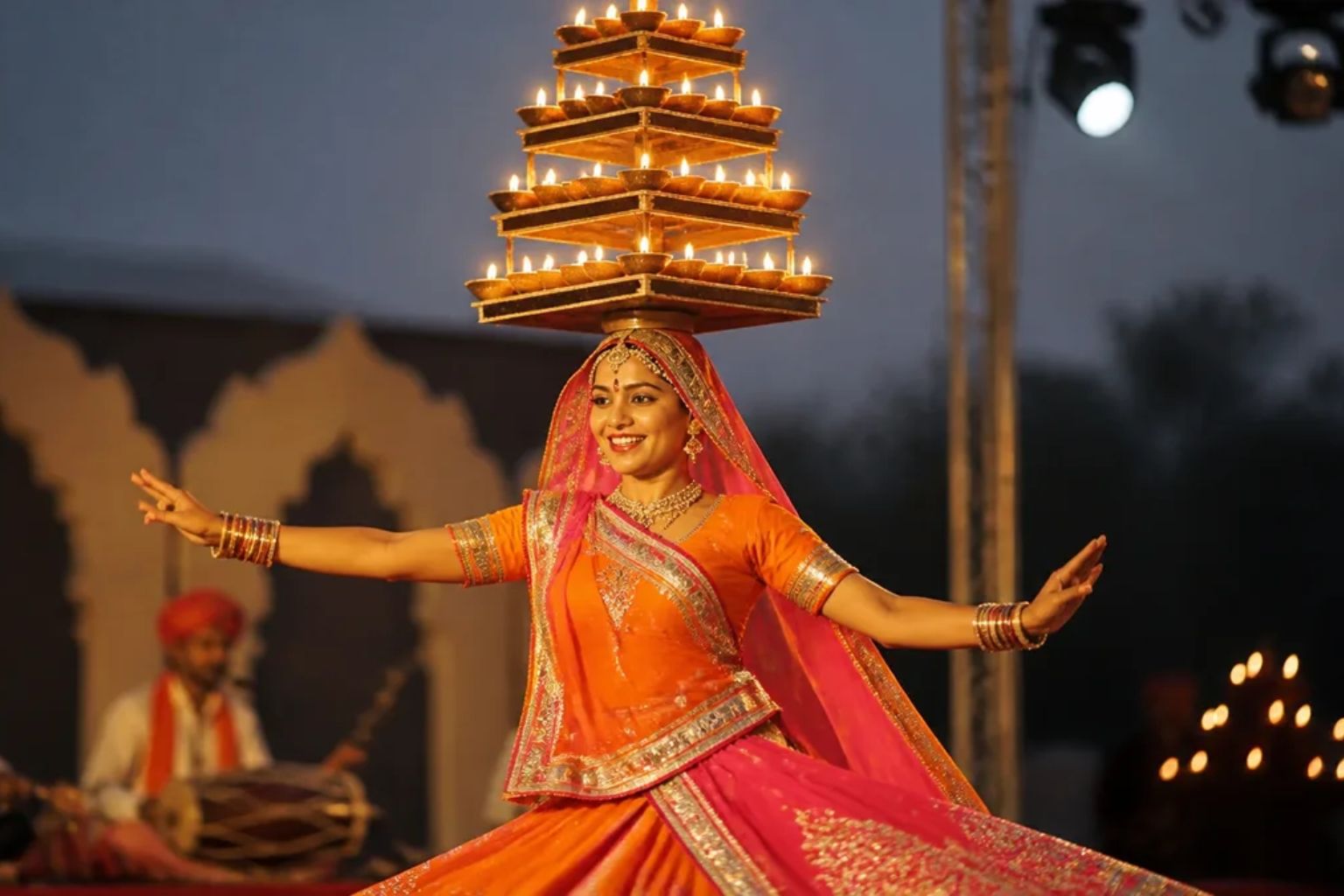
Charkula is a traditional folk dance of the Braj region of Uttar Pradesh in which dancers — traditionally veiled women — balance a tiered, wheel-like wooden structure carrying lighted oil lamps on their heads while dancing to Rasiya songs. It is performed in groups and is closely associated with devotion to Radha and Krishna.
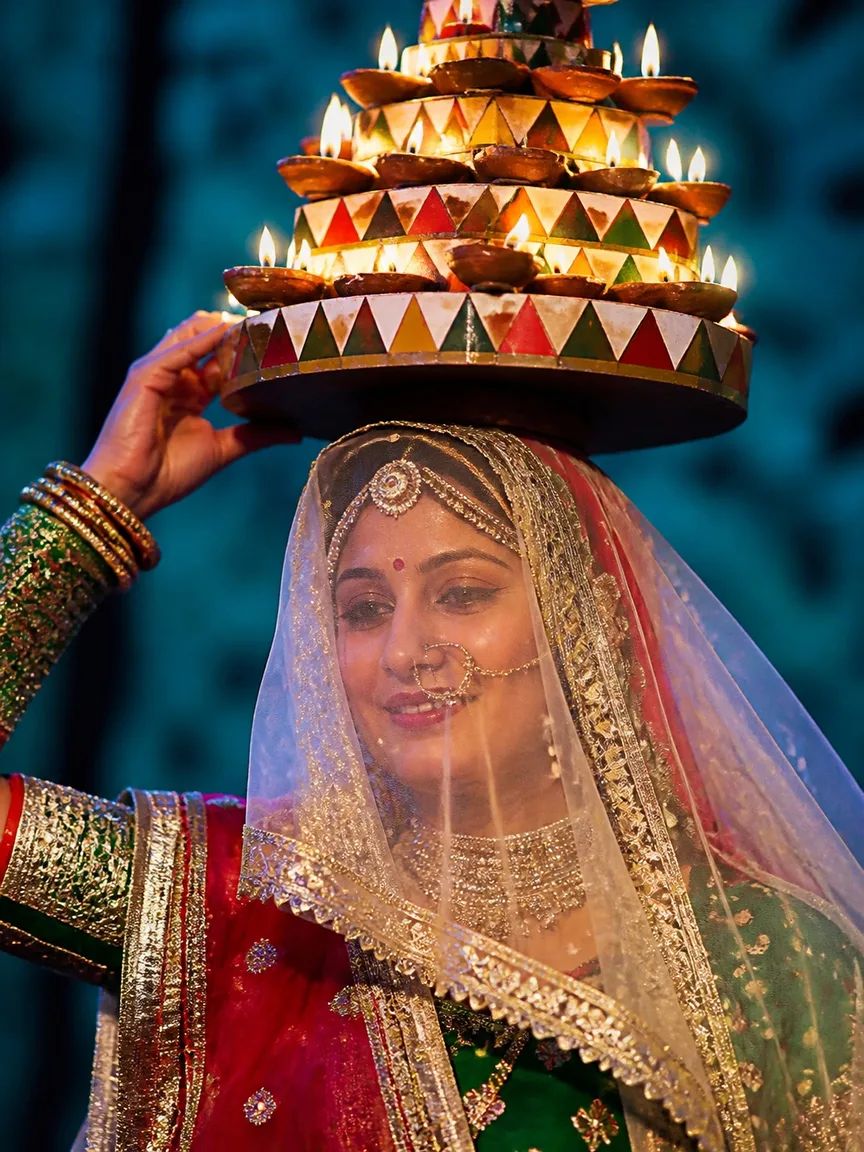
Charkula belongs to the living folk culture of Braj — the sacred landscape around Mathura and Vrindavan in western Uttar Pradesh. The dance takes its name from the charkula, the wheel- or pyramid-shaped wooden structure that a dancer carries on her head. Lit with small oil lamps and often decorated, it glows above the performers as they move, making the dance instantly recognisable even from a distance.
Unlike dances that centre on a single soloist, Charkula is essentially a group tradition. Dancers move in coordinated circles and lines, swirling and bowing in rhythm while keeping the lamp structure steady — a feat of balance that takes years of practice. The music that carries the performance is Rasiya singing, the beloved folk-music form of the Braj region, supported by traditional percussion.
For audiences, a Charkula performance is both spectacle and devotion: colour, light and rhythm woven into one of the most distinctive traditions of the folk dances of Uttar Pradesh. For cultural organisations, schools and event planners, it offers an authentic glimpse of Braj heritage that few other performances can match.
History and Origin of Charkula Dance
Charkula has been handed down through generations of Braj communities as an oral and living tradition, so its exact period of origin is not historically documented. What is well established is its home: the Braj region of western Uttar Pradesh, and especially the area around Mathura district. The village of Mukhrai, near Mathura, is widely regarded as the traditional home of the dance and is still associated with its practice.
The most widely told origin story connects Charkula with the birth of Radha, the divine consort of Krishna. According to folk tradition, on the night Radha was born, her grandmother ran out of the house carrying a charkha or bullock-cart wheel fitted with lighted lamps, to announce the good news to the whole village. The joyful, lamp-lit dance that grew from that moment is said to be the ancestor of today's Charkula, which is why the dance has remained, at heart, an offering of devotion to Radha and Krishna.
Scholars and cultural writers also trace the name to the Sanskrit-derived word chakra, meaning wheel or circle — a reference both to the circular lamp stand and to the dance's whirling, circular movements. A related tradition holds that the dance celebrates the cowherd community of Braj and the joyful legends of Krishna's land.
It is important to distinguish cultural tradition from recorded history: these stories belong to the devotional memory of Braj rather than to dated historical records. What history does confirm is that Charkula has survived and flourished as one of the signature folk traditions of the region, kept alive by village communities and folk artists of Mathura and neighbouring areas, and presented today on festival and cultural stages across India.
Why Is Charkula Dance Famous?
Charkula draws audiences wherever it is staged. Its reputation rests on a few unmistakable qualities:
-
The Lamp-Balancing Feat
A tall, tiered structure of lighted oil lamps balanced on the head — while dancing, turning and bowing — makes Charkula an unforgettable spectacle of balance and grace.
-
Graceful Group Movement
Dancers swirl, circle and bend in coordinated rhythm, their veils and flowing ghagras creating moving patterns of colour across the stage.
-
Devotional Heart
Every performance is rooted in the Radha-Krishna devotion of Braj, giving the dance a warmth and meaning beyond pure entertainment.
-
Rasiya Music
The Braj region's beloved Rasiya songs — sung live with folk percussion — give Charkula its distinctive musical soul.
-
Traditional Braj Attire
Colourful ghagra-choli, translucent veils and traditional ornaments present the heritage dress of the Mathura countryside in its full glory.
-
A Rare Living Tradition
Charkula remains a village-grown art of the Braj region, which makes an authentic performance a genuinely special experience for cultural audiences.
How Is Charkula Dance Performed?
Every troupe shapes the performance in its own way, but a traditional Charkula presentation usually follows this broad flow:
-
Preparation and Lighting of Lamps
Before the performance, the charkula structures are prepared and the oil lamps (diyas) are lit. Dancers then place the tiered stands on their heads with practiced care — the moment audiences most often remember.
-
Traditional Costume
The dancers appear in Braj-style ghagra or lehenga with choli, veiled by a translucent odhni and adorned with traditional jewellery. The flowing, colourful dress is integral to the dance's visual character.
-
The Head-Balancing Element
With the lamp structure balanced, the dancer's challenge is to keep it steady through every movement. Posture, neck control and a calm, measured grace are the invisible skills behind the magic.
-
Movement and Rhythm
Dancers begin with gentle steps, then build into swirling turns, circular formations and rhythmic bowing — always in control of the lamps above. Movements typically quicken as the music rises.
-
Musical Accompaniment
Rasiya singing carries the performance, supported by dholak or dhol, manjira and khartal, often with a harmonium. The singers' verses — usually in the Braj dialect — narrate the devotion and legends of Radha and Krishna.
-
Group Coordination
Charkula is a collective art: dancers mirror and complement one another in circles and rows, and the formations themselves become part of the storytelling.
-
Closing
Performances usually close with the dancers slowing to a final graceful pose, lamps still burning, before carefully removing the charkula — a quiet, almost ceremonial end to a vibrant celebration.
The exact choreography, formation and duration vary from troupe to troupe and from village tradition to stage adaptation — which is part of the charm of a living folk art.
Charkula Dance Costume and Traditional Appearance
The Charkula costume reflects the traditional dress of Braj's countryside, designed for both beauty and movement:
- Ghagra or lehenga — a full, flowing skirt in bright festive colours, often with gota or bordered work that catches the light
- Choli and odhni — a fitted blouse with a sheer veil draped over the head and face, the classic mark of the veiled Charkula dancer
- Jewellery and bangles — traditional silver or imitation ornaments, bangles and anklets that echo the rhythm of the steps
- The decorated charkula — the lamp pyramid itself is often painted, wrapped or ornamented, glowing as the centrepiece of the entire presentation
Colours and embellishments vary between troupes and regions of Braj, and some groups adapt the attire for stage lighting and longer performances. The overall effect, however, is always the same: a moving tableau of Braj's traditional colour and grace.
Music and Instruments Used in Charkula Dance
Charkula is inseparable from Rasiya — the folk-song tradition of the Braj region, sung in the Braj dialect in praise of Radha and Krishna. The singers lead the performance, and the dancers answer in movement.
The usual accompaniment is folk percussion and melody: a dholak or dhol keeping the beat, manjira (hand cymbals) and khartal adding sparkle, and frequently a harmonium supporting the Rasiya vocals. On larger stages, troupes may add instruments such as the bansuri (flute) or shehnai, and some presentations use recorded tracks when a live ensemble is not practical.
There is no single, fixed orchestra for Charkula — instrumentation differs by troupe, budget and occasion. When you enquire about booking, it is worth asking whether the group performs with live musicians or recorded music, as this shapes both the sound and the stage arrangements.
Cultural Significance of Charkula Dance in Uttar Pradesh
Charkula is more than a performance — it is an expression of Braj cultural identity. The dance carries the region's devotional affection for Radha and Krishna into public celebration, keeping the stories, dialect and aesthetics of Mathura's countryside alive on stage.
In its traditional setting, Charkula belongs to the community: performed at festive gatherings, fairgrounds and celebrations in the Braj region, it is a village art handed from mother to daughter and guru to shagird. Its survival depends on exactly that chain — elder dancers training the next generation, and audiences who continue to value the tradition.
On festival stages — from state cultural programmes and tourism events to school, college and heritage showcases — Charkula represents the folk heritage of Uttar Pradesh with a dignity few acts can match. Each booking and public performance gives Braj's rural women artists visibility and livelihood, and gives audiences a direct connection to a tradition that has glowed, literally, for generations.
Where Is Charkula Dance Performed?
Charkula belongs to the Braj cultural region of western Uttar Pradesh — the landscape around Mathura and Vrindavan, dotted with villages associated with the legends of Radha and Krishna. The village of Mukhrai in Mathura district is especially linked with the dance's origin and continued practice.
Traditionally, the dance is associated with the Holi season and festive occasions across the Braj countryside, performed to Rasiya songs in celebration of Radha-Krishna devotion. Today, Charkula is not confined to its home region: troupes from the Mathura area present the dance at cultural festivals, government programmes, tourism showcases, heritage events and stage shows across India and abroad.
In other words, the tradition's roots are firmly in Braj — but a Charkula performance can be staged wherever there is an audience for authentic Uttar Pradesh folk culture.
Charkula Dancers and Folk Dance Artists
Professional Charkula artists come from the folk-theatre networks of the Braj region and beyond. When you book through a recognised platform, a typical Charkula dance group can provide:
-
Traditional Group Performance
An ensemble of Charkula dancers in full traditional costume, performing the lamp-balancing dance in its authentic Braj form.
-
Stage-Ready Presentation
Formations and choreography adapted for festival stages, hotel lawns, auditoriums and outdoor venues, with cues rehearsed to the event's schedule.
-
Costume and Props
Traditional ghagras, veils, ornaments and the prepared charkula lamp structures — the troupe's own, not the venue's.
-
Music Coordination
Rasiya singing with live folk musicians where available, or coordinated recorded tracks when the event's setup calls for it.
-
Flexible Duration
Performances shaped to the event — from a striking 10–15 minute showcase to longer sequences, depending on the troupe and programme.
-
Event-Specific Planning
Group size, entry sequence and music cues discussed in advance to suit weddings, festivals, school programmes or corporate stages.
Whether you need a compact group for a private celebration or a full ensemble for a festival mainstage, folk dance troupes for events can be matched to the occasion through a simple enquiry.
Charkula Artist Booking for Events
Planning to book a Charkula dance performance? Sharing a few details upfront helps match the right troupe, group size and music arrangement to your event:
- Event date and city / location
- Number of guests
- Venue and stage size
- Indoor or outdoor setup
- Preferred performance duration
- Type of event
- Number of performers required
- Sound and music arrangements
Once these basics are known, availability, group size and the right presentation of the traditional Charkula dance for your stage can be confirmed with the artists.
Events Where Charkula Dance Can Be Presented
Depending on the troupe and event requirements, Charkula performances are commonly presented at:
- Cultural festivals
- School & college cultural programmes
- Government & civic cultural events
- Tourism & heritage events
- Folk culture festivals
- Corporate cultural evenings
- Brand & cultural activations
- Wedding cultural programmes
- Traditional & religious celebrations
- Stage shows & award nights
The dance's devotional heart and gentle, family-friendly spectacle make it especially well suited to heritage and cultural showcases — while its visual drama gives it genuine stage presence at large public events.
Charkula Within UP's Dance Traditions
Uttar Pradesh is home to a remarkable range of performing traditions — the classical elegance of Kathak, the devotional drama of Raslila, the folk opera of Nautanki, and a wide spectrum of folk forms. Within this landscape, Charkula holds its own distinctive place: a women's group dance of the Braj countryside, defined by devotional music and the art of head-balancing. Travellers to neighbouring regions will find kindred traditions elsewhere too — for example, the Bhavai dance of Gujarat and Rajasthan, where performers balance pots rather than lamps, or the graceful Ghoomar of Rajasthan. Each form tells its own regional story — Charkula tells Braj's.
Why Choose a Traditional Charkula Performance?
For audiences, a Charkula performance offers:
- A traditional visual presentation found nowhere else — dancers glowing with tiered lamps
- Cultural storytelling from the land of Radha and Krishna
- Graceful, coordinated group movement in colourful Braj attire
- Regional heritage presented with dignity and authenticity
- Live folk music and Rasiya singing (with live musicians, depending on the troupe)
- A memorable centrepiece for cultural programmes and celebrations
It is this combination — devotion, artistry and spectacle — that makes organisers return to Charkula year after year for cultural events across India.
Frequently Asked Questions
Charkula is a traditional folk dance of the Braj region of Uttar Pradesh, in which dancers — traditionally veiled women — balance a tiered, wheel-like wooden structure carrying lighted oil lamps on their heads while dancing to Rasiya songs. It is performed in groups and is closely associated with devotion to Radha and Krishna.
Charkula originated in the Braj region of western Uttar Pradesh, and is traditionally traced to the Mathura area — particularly the village of Mukhrai, which folk tradition links to the birth of Radha. Because it comes from oral tradition, the exact period of origin is not documented.
Charkula is associated with the Braj cultural region of western Uttar Pradesh — the area around Mathura and Vrindavan, with the village of Mukhrai near Mathura especially linked to its origin.
Its defining feature is the combination of graceful, swirling group movement with the balancing of a tall, tiered wooden structure of lighted oil lamps on the head. Dancers move, turn and bow in rhythm without letting the lamps fall, which demands remarkable balance and years of practice.
Dancers balance a charkula — a multi-tiered, wheel- or pyramid-shaped wooden stand carrying lighted oil lamps (diyas). It is commonly described as having 108 lamps, though the size and number of lamps vary by troupe and occasion.
Dancers traditionally wear colourful Braj-style ghagra or lehenga with choli, a translucent odhni veil draped over the head and face, and traditional silver or imitation jewellery with bangles. The charkula lamp structure itself is often decorated. Exact colours and details vary between troupes.
Charkula is traditionally performed to Rasiya songs, supported by folk percussion such as dholak or dhol along with manjira and khartal, and often a harmonium for the singing. Instrumentation differs from troupe to troupe, so there is no single fixed list.
There is no fixed number. Charkula is a group dance traditionally performed by women, and the number of dancers depends on the occasion, the venue and the troupe — ranging from a handful of performers to larger groups for festival stages.
No. Charkula is traditionally associated with the Holi season and Radha-Krishna devotion in the Braj region, but it is also presented at fairs, cultural festivals, heritage events and stage programmes throughout the year.
Yes. BookMyDance helps event organisers enquire about traditional Charkula dance groups for cultural festivals, weddings, school and college functions, corporate cultural events and government or tourism programmes across India.
Share your event date, city, venue, event type and performance duration through the BookMyDance booking page. The team will confirm availability of Charkula dance artists, discuss the group size and music arrangements, and guide you through the rest of the booking.
Useful details include the event date, city and venue, whether the setup is indoor or outdoor, stage size, number of guests, event type, preferred performance duration, the number of performers required and the sound or music arrangements available at the venue.
Looking for Charkula Dancers for Your Event?
Share your event details and enquire about traditional Charkula dance groups and folk dance artists for your cultural programme, festival or celebration.
Book Charkula Dancers